Navratri Sadhana is a nine-night discipline that the waxing Moon times with mathematical precision. It offers every student and working professional a clear path to Maa Durga’s grace.
Only the nine nights of simple, sincere discipline can change everything for you. Furthermore, this year, the Adhik Maas has pushed Navratri into October. Meanwhile, the Sun leaves Virgo and enters Libra on Saptami night, that is on 17th Oct 2026, right inside the sadhana.
Therefore, this guide for Navratri Sadhana gives verified 2026 dates, scriptural meaning, and Jyotish guidance. Additionally, you will learn a practical method and how to choose remedies from your own chart.
Key Insights
Sharad Navratri 2026 begins on Sunday, 11 October and closes with Vijayadashami on Tuesday, 20 October 2026. Saptami tithi holds two sunrises this year. As a result, Durga Ashtami and Maha Navami both fall on Monday, 19 October.
The Adhik Jyeshtha month of 2026 added a thirteenth lunar month. Consequently, Navratri arrives about nineteen days later this year. On Saptami night, 17 October, the Sun enters Libra, its sign of debilitation.
Charaka Samhita (Sutrasthana 6.41) names Sharad Ritu as the season when stored Pitta flares. Hence a sattvic, Navratri vrat rejuvenates the body and mind.
Therefore, Navratri sadhana is best for holistic healing and karmic cleansing.
In this blog
Sharad Navratri 2026: Dates and Ghatasthapana Muhurat
Sharad Navratri 2026 begins with Ghatasthapana on Sunday, 11 October and ends with Vijayadashami on Tuesday, 20 October. The table below follows Drik Panchang for New Delhi.
For the complete samagri and every step of the first-day ritual, read our Ghatasthapana Puja Vidhi guide.
Day | Date | Tithi at sunrise | Devi Form / Observance |
1 | Sun, 11 Oct | Pratipada | Shailaputri · Ghatasthapana |
2 | Mon, 12 Oct | Dwitiya | Brahmacharini |
3 | Tue, 13 Oct | Tritiya | Chandraghanta |
4 | Wed, 14 Oct | Chaturthi | Kushmanda |
5 | Thu, 15 Oct | Panchami | Skandamata |
6 | Fri, 16 Oct | Shashthi | Katyayani |
7 | Sat, 17 Oct | Saptami | Kalaratri · Tula Sankranti at night |
8 | Sun, 18 Oct | Saptami (continues) | Kalaratri sadhana continues |
9 | Mon, 19 Oct | Ashtami → Navami | Mahagauri · Durga Ashtami · Sandhi Puja · Maha Navami (Siddhidatri) |
10 | Tue, 20 Oct | Navami → Dashami | Navami Homa · Navratri Parana · Vijayadashami |
Why Durga Ashtami and Maha Navami is on same day this year (19 Oct 2026)
A tithi is a lunar day, and it rarely matches a solar day exactly. This year, Saptami begins before sunrise on 17 October and still runs at sunrise on 18 October 2026.
In Panchang, this is called tithi vriddhi, an “increased” tithi that involves two sunrises. Consequently, the nine tithis stretch across ten calendar days.
For example, in New Delhi, Ashtami ends at 10:53 AM on 19 October, and Navami begins. Thus Sandhi Puja, the 48-minute junction of the two tithis, falls from 10:27 AM to 11:15 AM. Navami then continues into the morning of 20 October, so Navami Homa and Parana will be done on that day.
Navratri Importance - What the nine nights really mean
Navratri is a structured descent into Shakti, or simply the energy that makes every movement possible. The festival marks the Devi’s victory over Mahishasura, yet its deeper purpose is inner transformation and completely scientific.
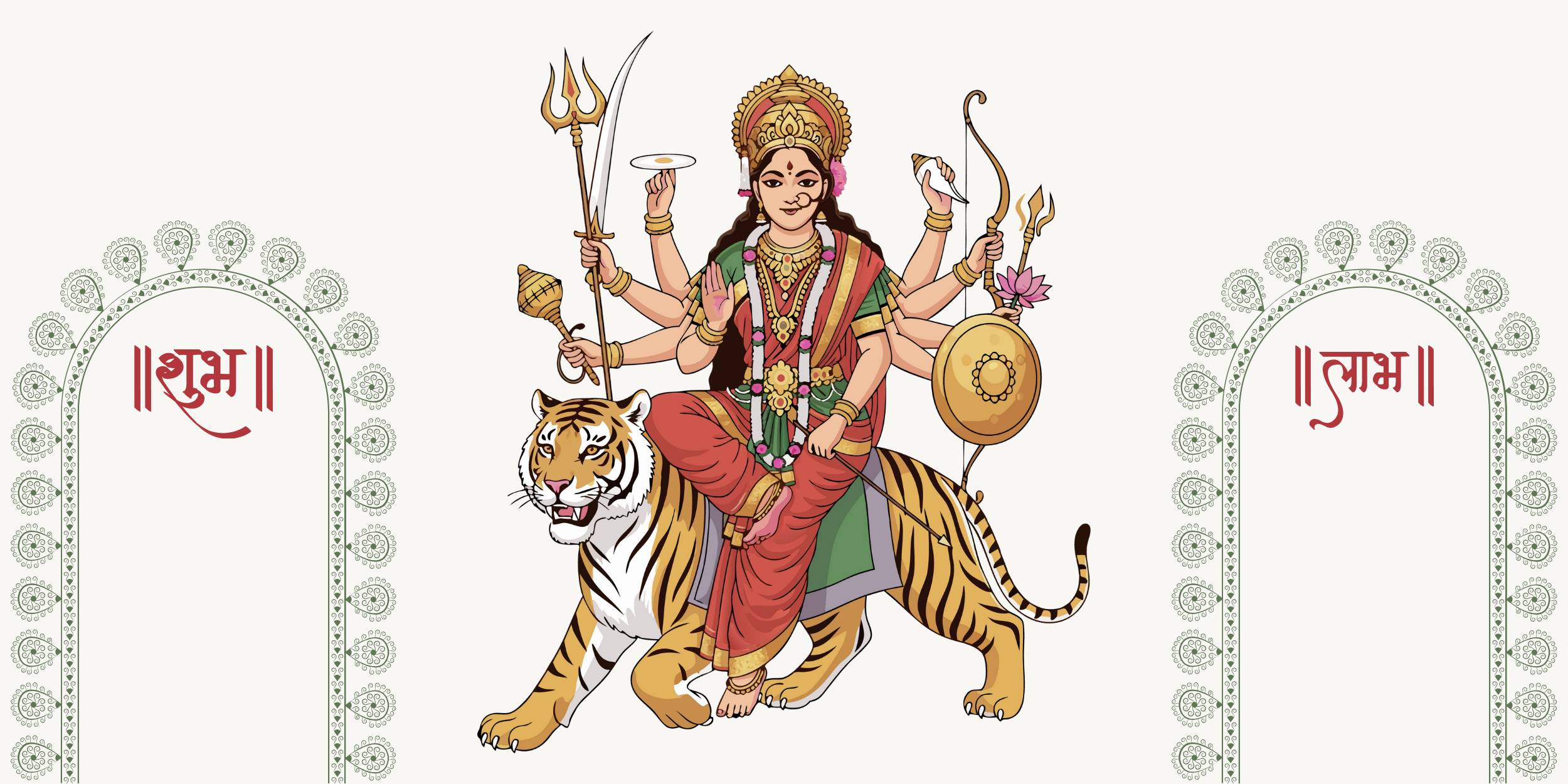
Why the Rishis counted nights, not days
Night matters here for a precise reason. By day, the senses face outward and the mind serves the world. At night, the senses withdraw, and the mind turns inward, becomes available for mantra japa.
Furthermore, the Rigveda honours Night as a goddess in the Ratri Sukta (10.127). Shakta tradition recites a Rātri Sūkta before the Durga Saptashati. Thus the nights themselves become the sadhana’s instrument.
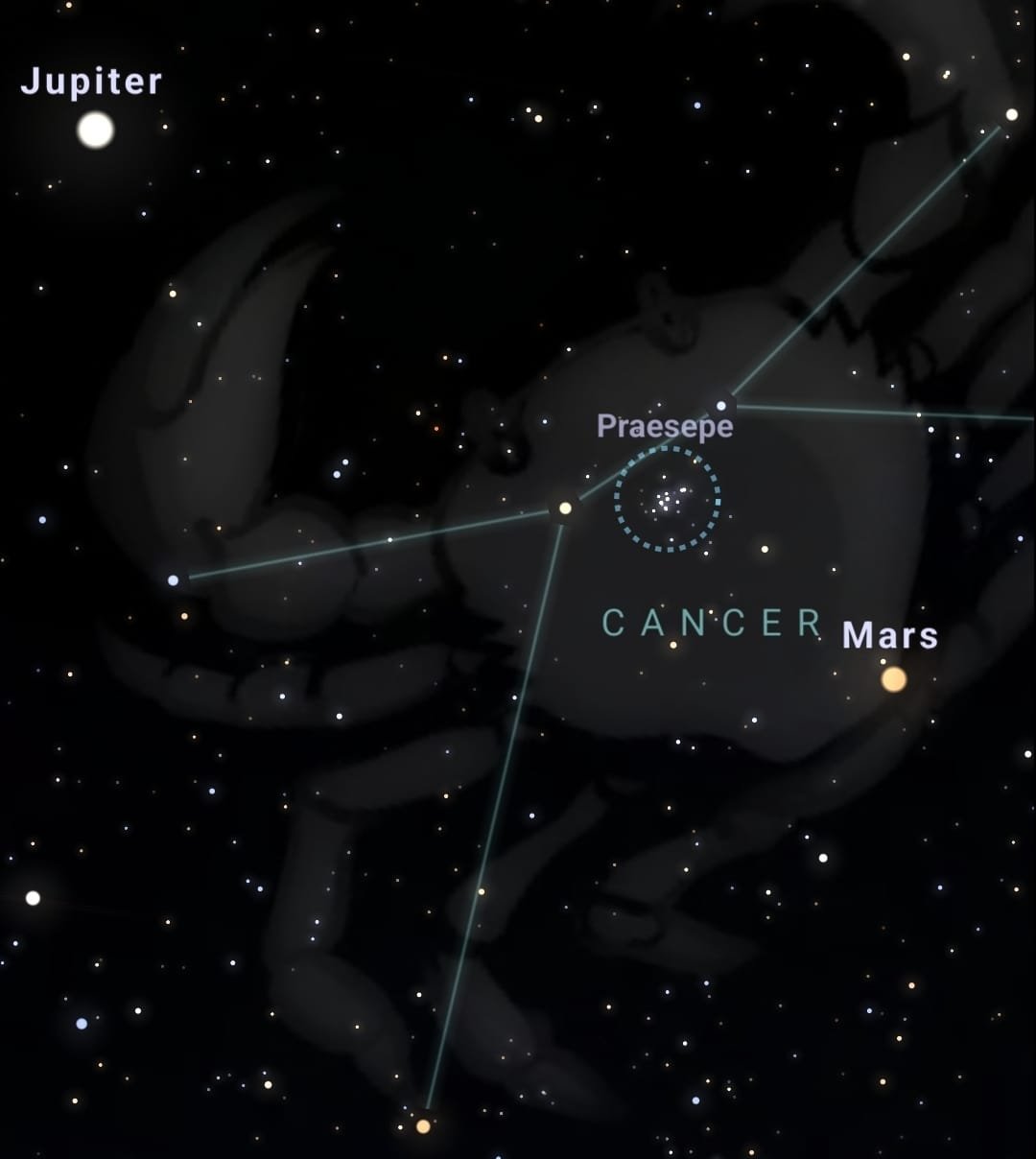
A rare Jyotish exception this year: Mars is transiting through cancer, its debilitation sign. Mars entered Cancer on 18 Sep 2026 and will leave on 12 Nov 2026, to enter Leo.
Guru-Mangal Yoga in Navratri 2026: Mars and Jupiter transit in Cancer
Throughout Sharad Navratri 2026, Mars and Jupiter travel together in Cancer, forming a Guru-Mangal Yoga. Mars is debilitated in Cancer, so impulsive, ego-driven action loses its force. Meanwhile, exalted Jupiter in the same sign steadies and refines that energy.
Therefore, this Navratri sadhana favor inner strength. Additionally, channel Mars’s restless energy into japa and steady discipline.
This year, performing Navratri Sadhana and observing fast at least on Tuesday (13 Oct 2026) will benefit immensely. Especially, it will help people with anger issues and emotional turmoil.
The Jyotish Science behind Navratri Sadhana
Navratri sits inside Shukla Paksha, the bright fortnight, when the Moon’s light grows every night. Jyotish reads that growing light as growing strength of the mind.
This is also why you have to focus inward and develop calm through meditation on the divine mother through Navratri sadhana. Moreover, this Guru-Mangal Yoga is going to help everyone immensely, in achieving serenity.
This will help you in increasing your aura and willpower and drive success.
The Moon, the mind and the waxing fortnight
The Purusha Sukta says चन्द्रमा मनसो जातः or “the Moon was born from the cosmic mind” (Rigveda 10.90.13). Accordingly, in Jyotish, the Moon is the significant of mind. Additionally, the Moon rules the sign of Cancer.
A waxing Moon, therefore, means a mind gaining strength every day until the Purnima tithi.
Integrating the festival of Navratri, the Guru-Mangal Yoga in Cancer, there can not be any more great opportunity to work on the mind to manifest individual gaols.
Read more on the Moon in Vedic Astrology.
Tithis as twelve-degree steps & the mathematics of cosmos
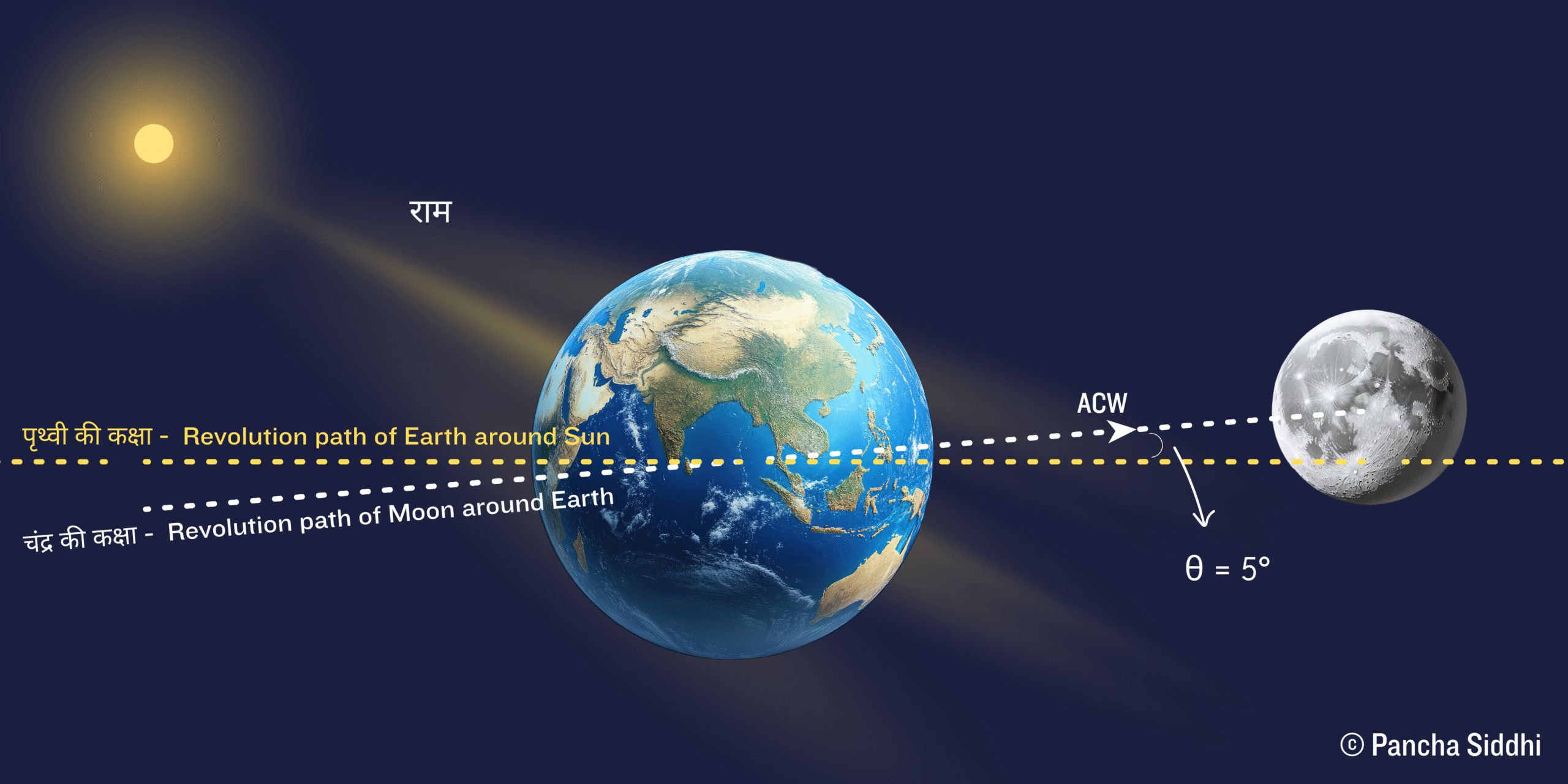
A tithi is not a mystical unit; it is a measured angle. Each tithi equals 12 degrees of angular-separation between the Sun and the Moon.
Therefore, Pratipada covers the first 12 degrees after Amavasya. In modern science, mathematics gives the lit fraction of the Moon as (1 − cos θ) ÷ 2.
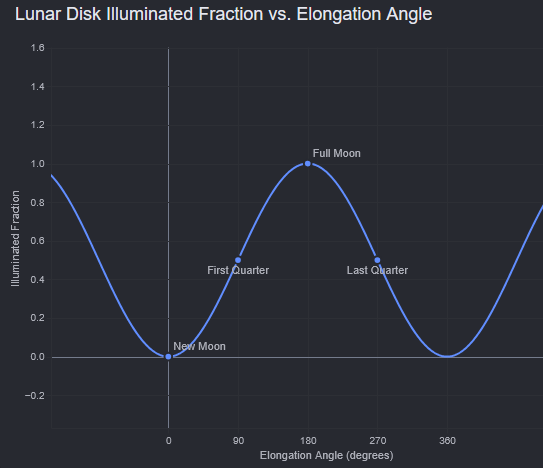
Therefore, as per this function, 0° to 180° degrees represents the Shukla Paksha. From 180° to 360° is the Krishna Paksha, that completes one Moon cycle. Exactly at 180° is the full moon, Purnima tithi.
Note that Navami tithi (Navratri) is exact from 96° to 108°. It is called Maha Navami, the final boundary of 108° of Moon’s angular distance form the Sun. It is where Maa Siddhidhatri blesses a seeker.
The meaning is clear. Mother who is giver of Siddhi. The number 108 keeps arising whenever we talk about the divine mother. Therefore, it is how many times you need to do the Navarna Mantra japa in Navratri Sadhana with proper vidhi described ahead with sankalp.
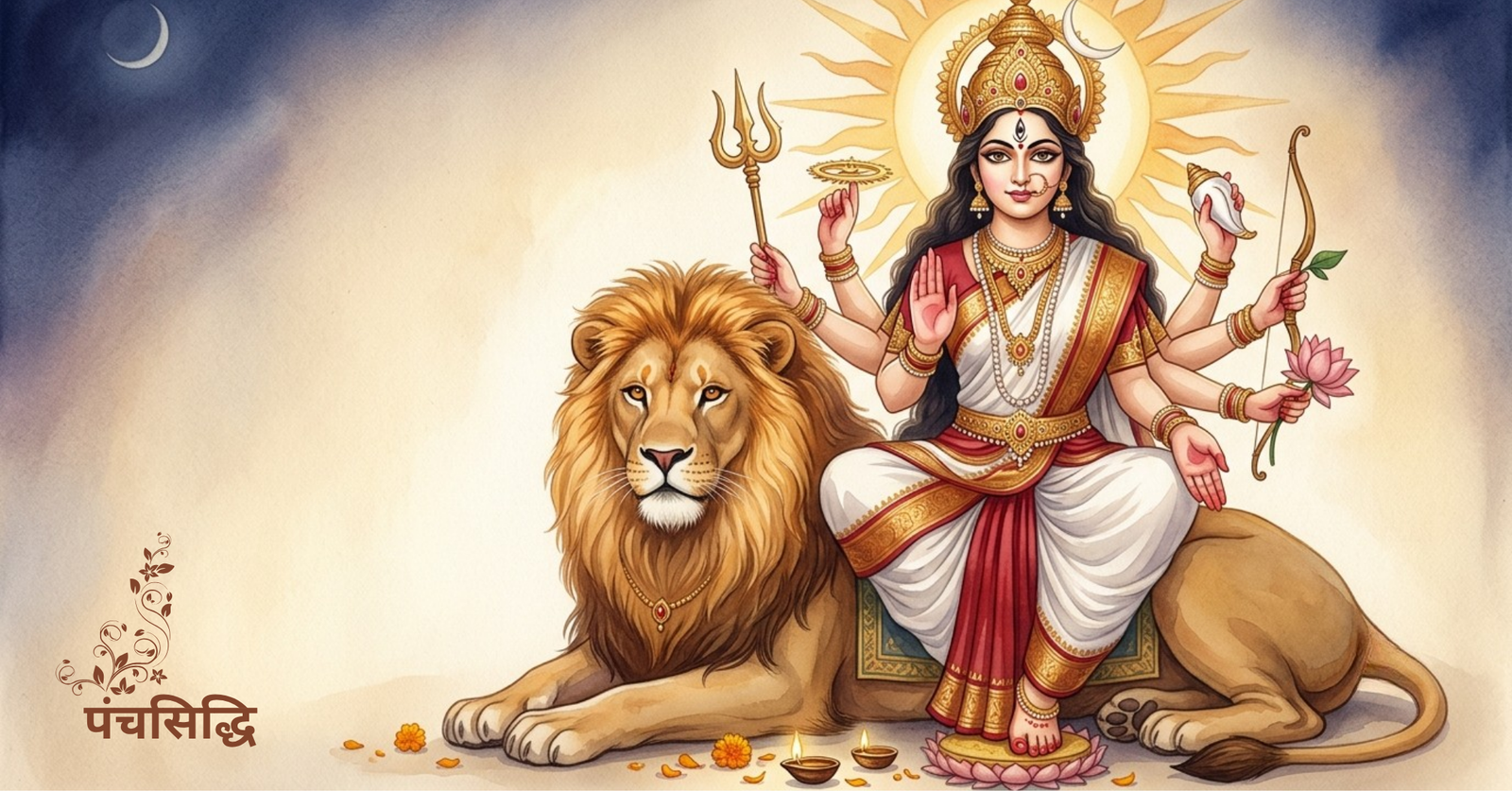
Importance of Sankalp on Pratipada, the first day
A sankalp, the formal intention-setting of a sadhana, done on Pratipada tithi. Intention is set to direct your spiritual energy toward a specific goal.
Navratri is a powerful nine-night festival dedicated to the Divine Mother (Maa Durga). Taking a sankalp on the first day transforms a routine prayer into a potent act of manifestation and inner transformation.
It gives the seeker an inward mental clarity, which in turn, gives confidence and increase willpower over completion of Navratri Sadhana.
The Sun enters Libra on Saptami night
In 2026, the Sun transits through Virgo for the first six days. Then, at 07:57 PM on 17 October (New Delhi), it enters Libra, its sign of debilitation. Mercury and Venus are also positioned in Libra, forming Lakshmi-Narayan Yoga, where Venus already owns Libra.
Therefore, in Navratri 2026, something exceptional is happening.
Debilitation of Sun means the Sun’s outward authority softens. This is the combination for turning inward, learning, and purchasing some “asset” on Vijayadashmi, the perfect yoga.
Maa Durga’s blessings will support this brilliant yoga.
Navratri Sadhana & Ayurveda - The Pitta Season & Fasting
Navratri falls in Sharad Ritu, the season when Pitta dosha reaches its peak. Acharya Charaka explains the mechanism with clinical precision. During the rains, the body grows used to cool, cloudy days, and Pitta quietly accumulates. Then the clouds clear, and the sudden autumn sun provokes that stored heat.
Therefore, the traditional Navratri Vrat or Fasting is a seasonal medicine.
However, in 2026, Mars (Karaka of Pitta) is debilitated in cancer. Hence, observing fast with sadhana during Navratri enhances healing properties.
For the remedy, Acharya Charaka prescribes food that is sweet, light, cool and slightly bitter, taken only with true appetite (6.42). Moreover, he advises avoiding oils, fats, curd, alkaline preparations and daytime sleep in this season (6.45). Read the complete Tasyashitiya Adhyaya.
Navadurga - The nine forms of Maa Durga
The Navadurga are nine forms of one Devi, each governing one stage of inner growth. Identify the form of Devi whose quality matches your present challenge, and give her day extra japa and attention.
Day 1 - Shailaputri on Sunday, the daughter of the Mountain
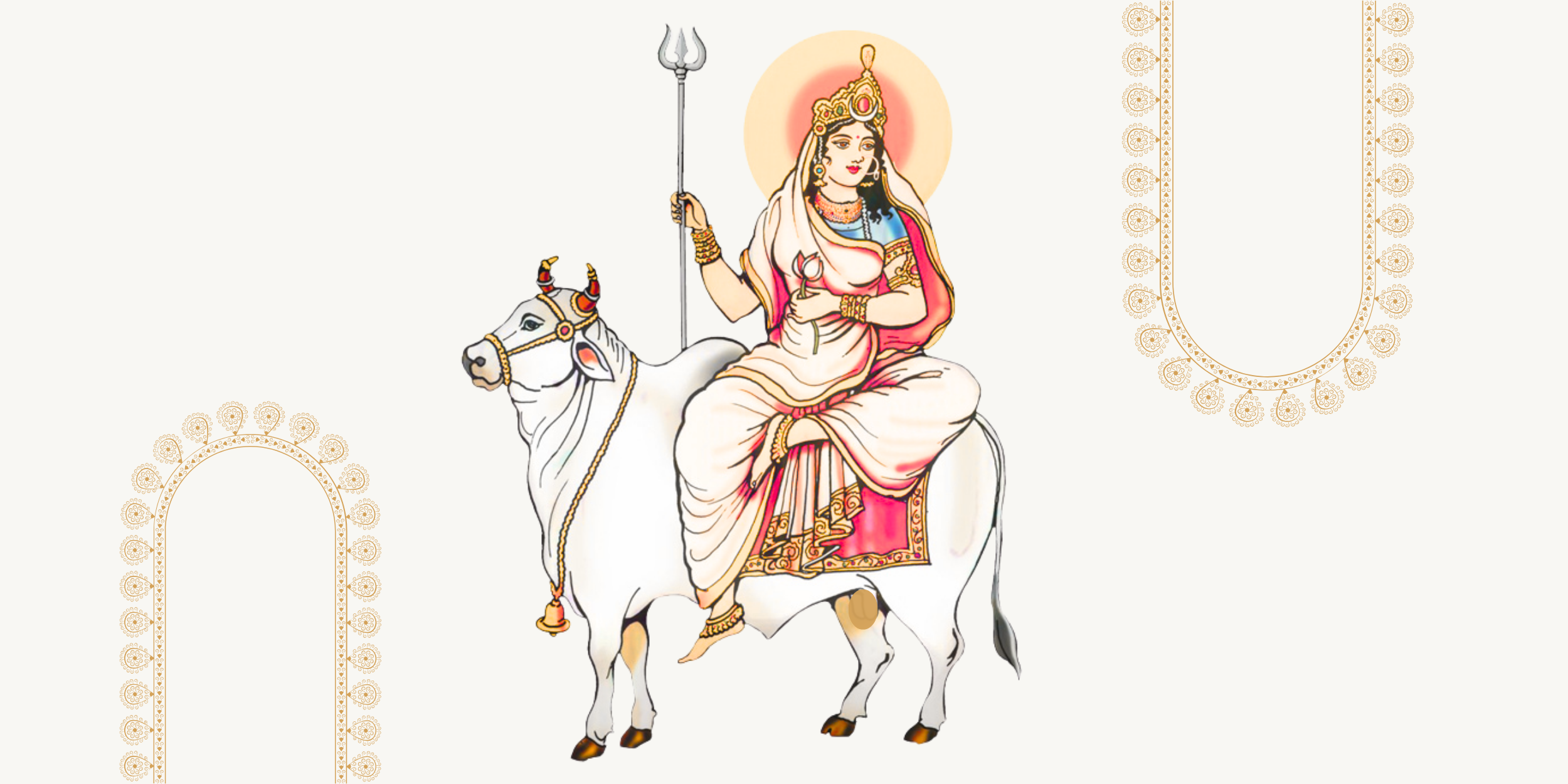
Shailaputri means “daughter of the mountain.” She embodies stability, the ground on which every sadhana stands. First day practice: fix your seat, your time and one written aim for the nine nights.
वन्दे वाञ्छितलाभाय चन्द्रार्धकृतशेखराम्। वृषारूढां शूलधरां शैलपुत्रीं यशस्विनीम्॥
Take your sankalp, set intention before the Ghatasthapana.
Day 2 - Brahmacharini on Sunday, the Devi of Tapas
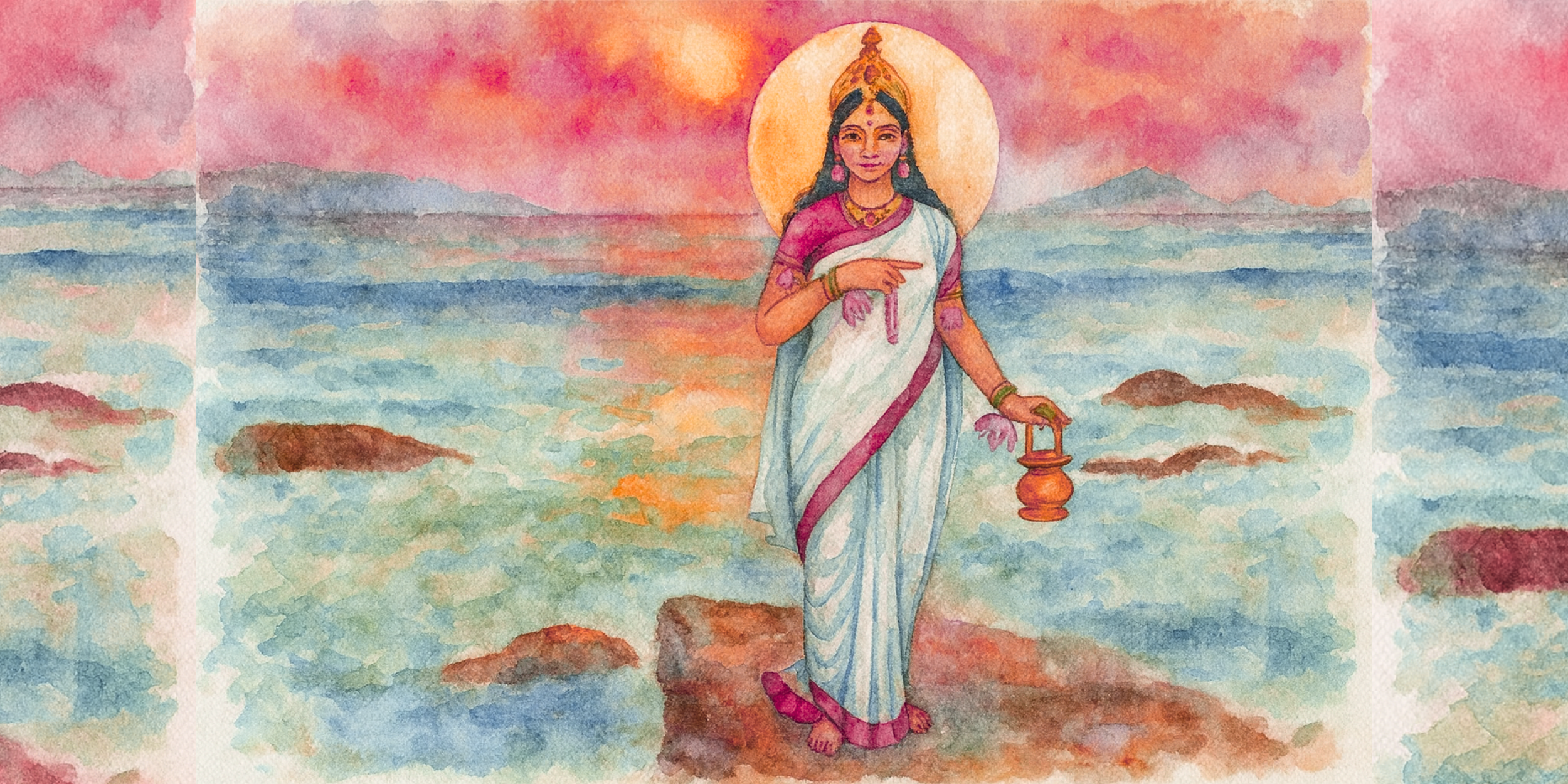
Brahmacharini is the one who walks in Brahman. She holds the mala and the kamandal.
दधाना करपद्माभ्यामक्षमालाकमण्डलू। देवी प्रसीदतु मयि ब्रह्मचारिण्यनुत्तमा॥
Second day practice: complete one uninterrupted block of deep work or study before touching your phone. That is modern tapa. Embrace focus and happiness in whatever work you are doing. This is the best day to initiate your meditation and sadhana.
Day 3 - Chandraghanta, courage with composure
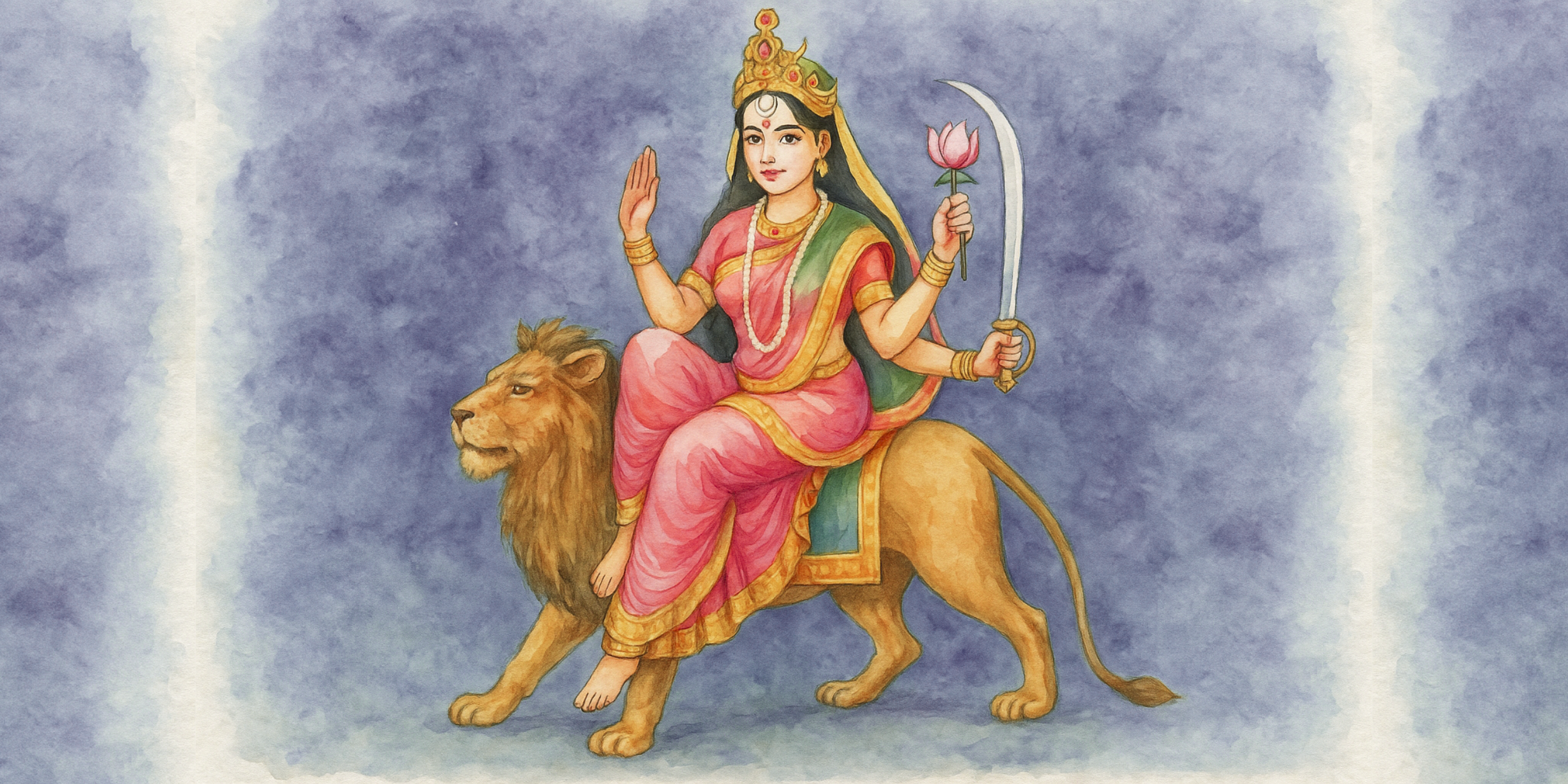
Devi Chandraghanta wears a bell-shaped half-moon on her forehead. Her bell’s sound dispels fear, yet her face stays serene.
पिण्डजप्रवरारूढा चण्डकोपास्त्रकैर्युता। प्रसादं तनुते मह्यं चन्द्रघण्टेति विश्रुता॥
Third day practice: hold the one difficult conversation you have postponed. Meditate on Mata Chandraghanta and initiate your public speaking work and leadership.
Day 4 - Kushmanda, the warmth that creates
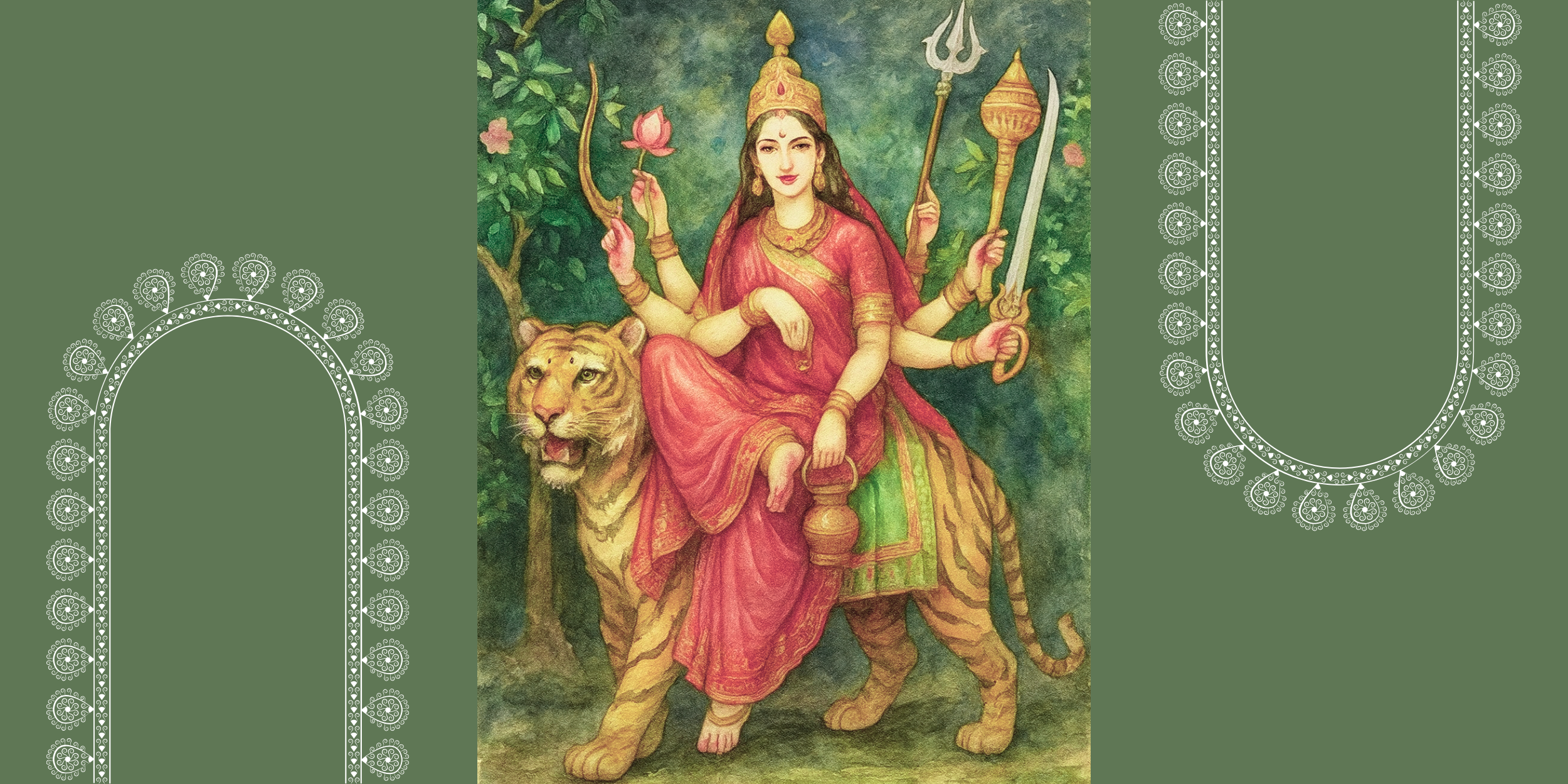
As per texts her name is analyzed as as ku (little), usma (warmth) and anda (cosmic egg). Thus she creates a universe from a small, steady warmth. This is the divine mother’s infinite energy.
सुरासम्पूर्णकलशं रुधिराप्लुतमेव च। दधाना हस्तपद्माभ्यां कूष्माण्डा शुभदास्तु मे॥
Fourth day practice: Initiate a new project today. Do not try to finish it; simply plant the seed with warmth, which you will nurture strategically over a schedule.
Day 5 - Skandamata, the nurturing mother of Lord Kartikeya
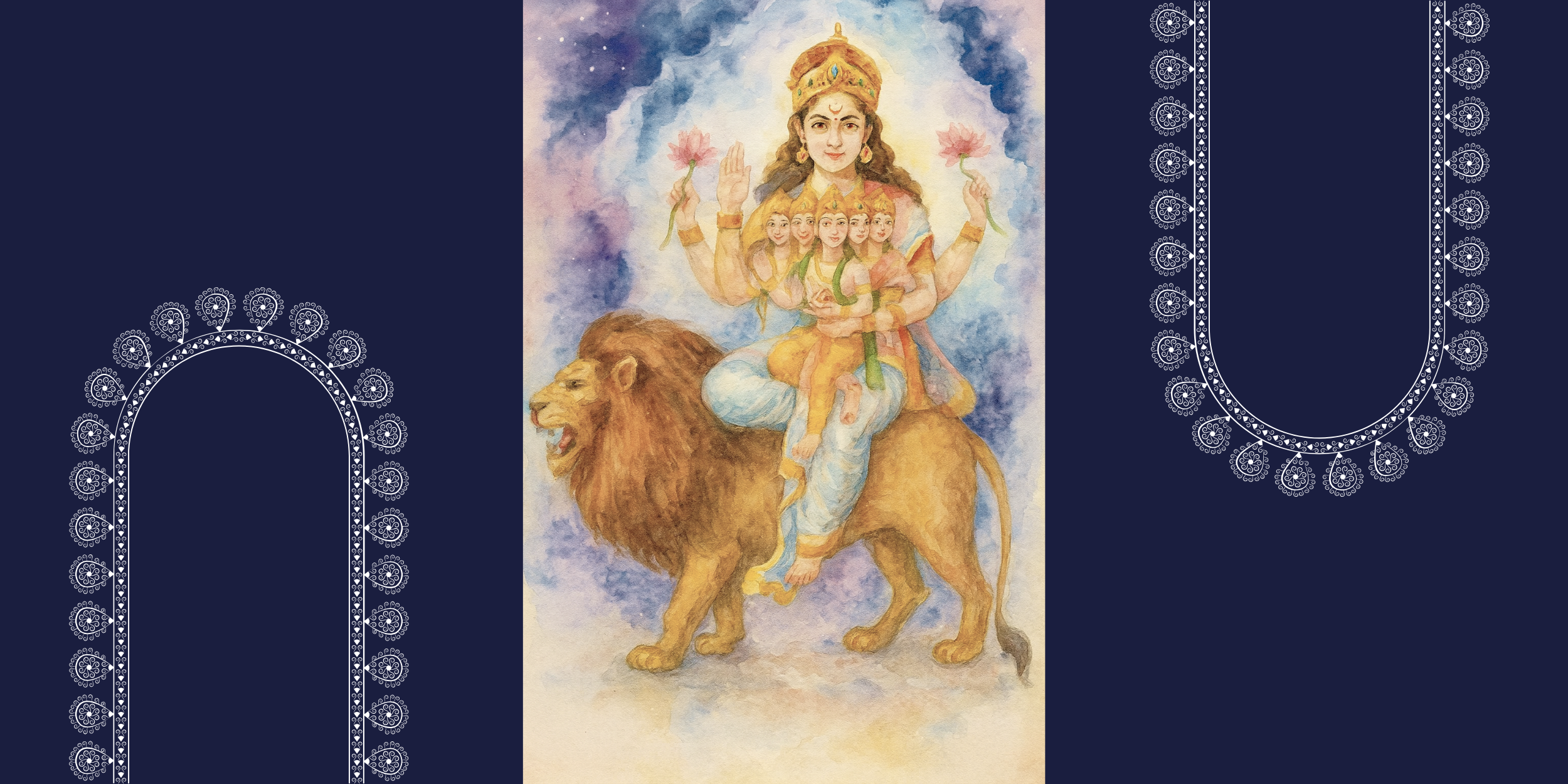
Skandamata is the mother of Skanda, Lord Kartikeya or Murugan, the cosmic commander of Devtas. She teaches that true strength grows through nurture, not force.
सिंहासनगता नित्यं पद्माश्रितकरद्वया। शुभदास्तु सदा देवी स्कन्दमाता यशस्विनी॥
Fifth day practice: teach or mentor someone. An important day for professional counselors to increase their skills and healing abilities.
Day 6 - Katyayani, decisive righteous action
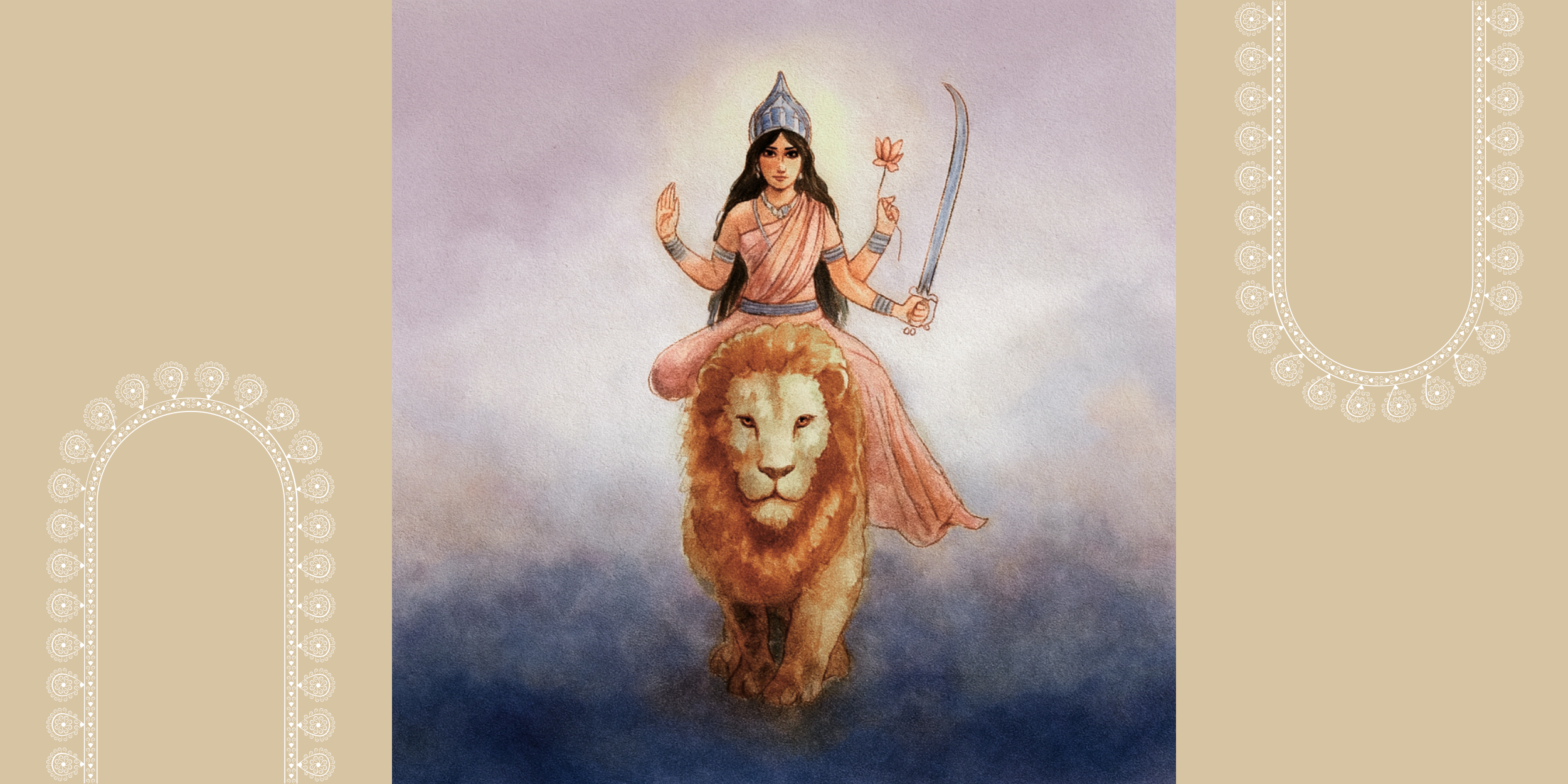
Katyayani takes her name from Sage Katyayana, in whose hermitage she manifested. She is the warrior form who confronts Mahishasura directly.
चन्द्रहासोज्ज्वलकरा शार्दूलवरवाहना। कात्यायनी शुभं दद्याद्देवी दानवघातिनी॥
Sixth day practice: Let’s be clear, its an important day for making distance with toxic or negative individuals from your life, respectfully and selectively. It is your circle that decides your life.
In 2026, this day also brings Saraswati Avahan, which is important for students and music professionals.
Day 7 and 8 - Kalaratri, the night that ends fear
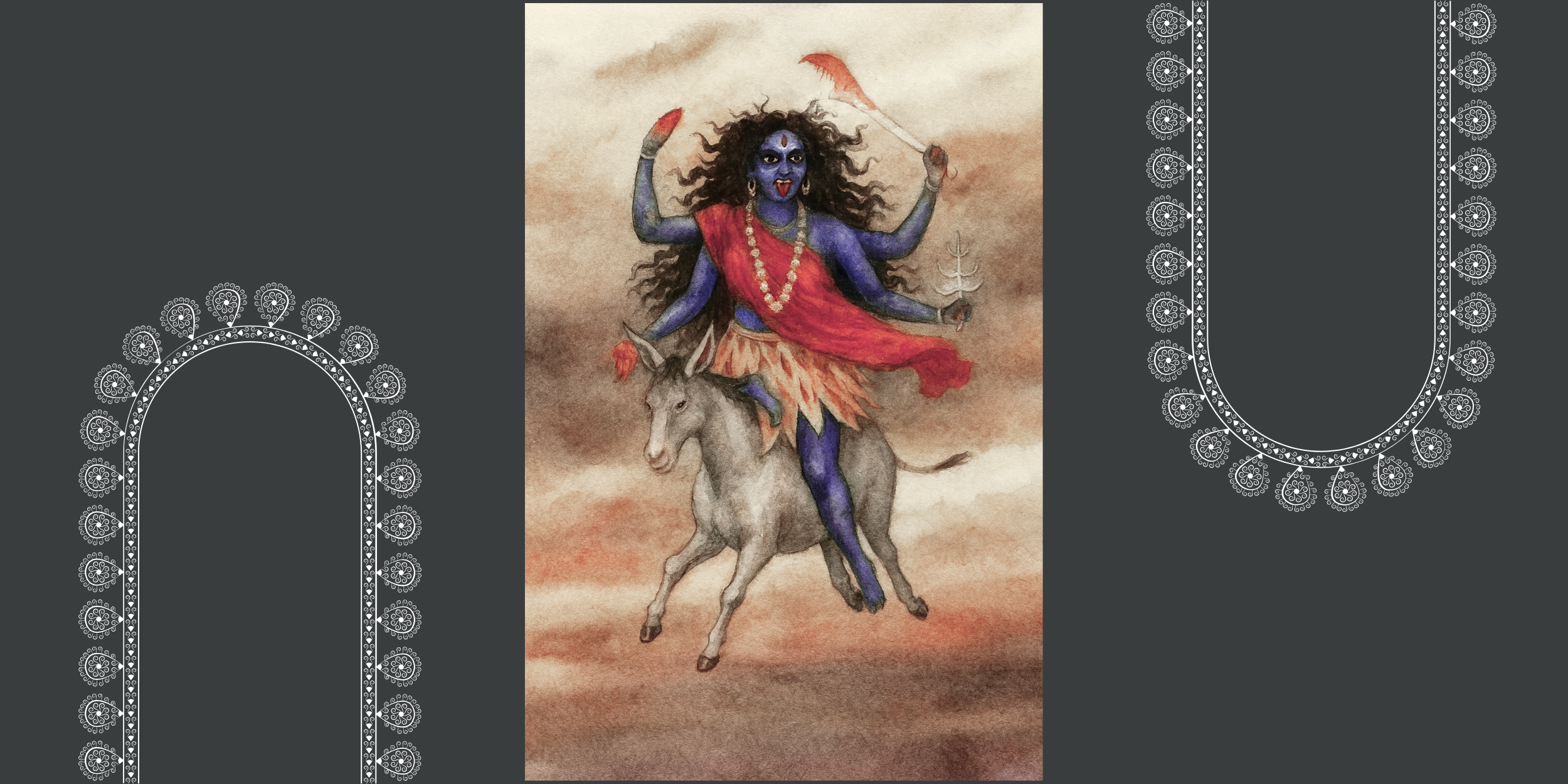
Kalaratri means “the night of time,” the darkness that dissolves every illusion. Her fierce form frightens only fear itself.
वामपादोल्लसल्लोहलताकण्टकभूषणा। वर्धनमूर्धध्वजा कृष्णा कालरात्रिर्भयङ्करी॥
Seventh & Eighth day practice: In 2026, Saptami spans two sunrises, so Kalaratri receives two days. Therefore, write one fear on Day 7, and take one concrete step against it on Day 8. Feel the energies within you and meditate.
Ashtami (19 October 2026) - Mahagauri, Purity Restored
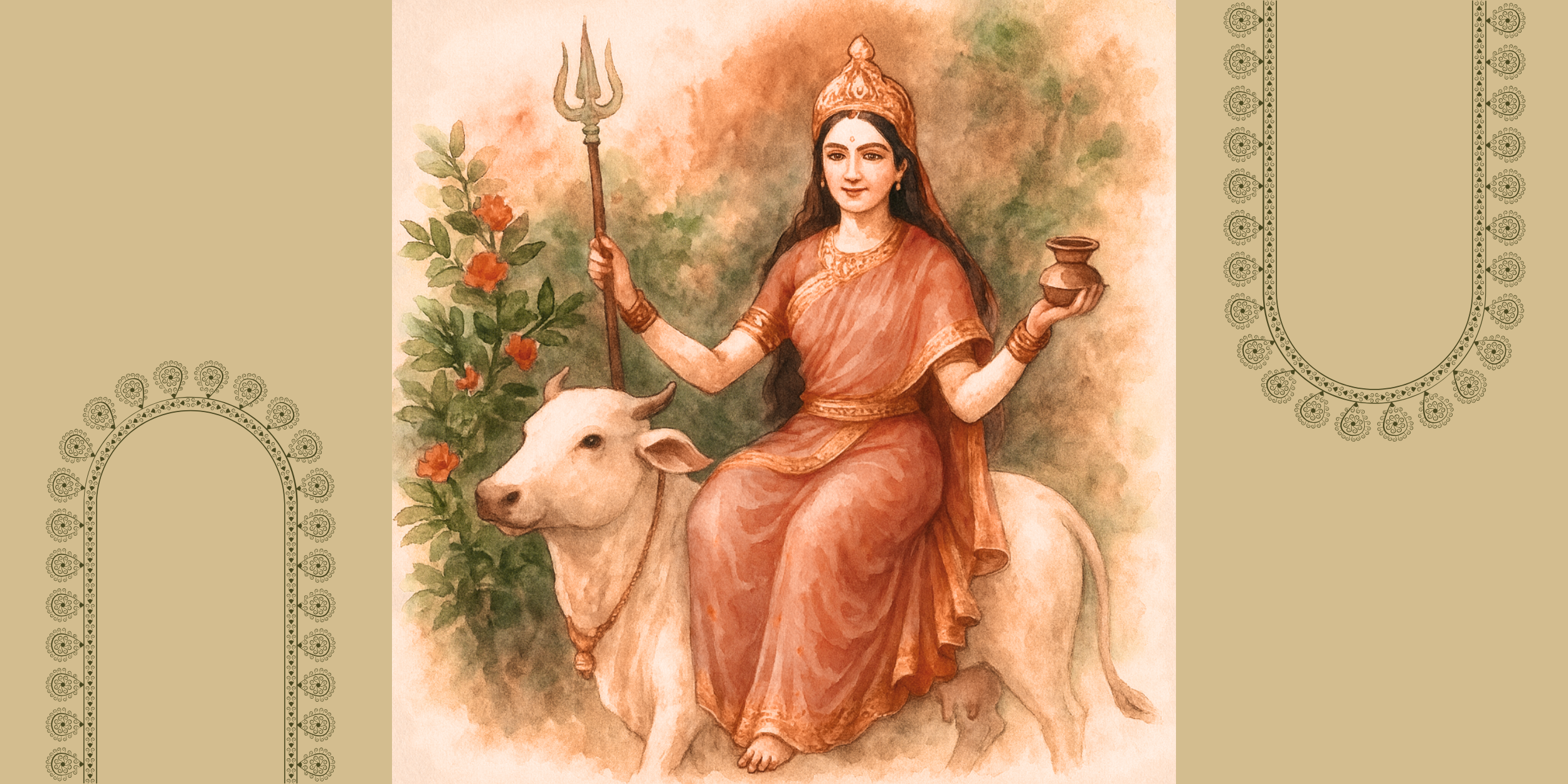
Mahagauri means “the great radiant one.” After Kalaratri’s righteous obliteration, she shows the clarity that remains once impurities burn away.
श्वेते वृषे समारूढा श्वेताम्बरधरा शुचिः। महागौरी शुभं दद्यान्महादेवप्रमोददा॥
Ashtami practice: Meditate and visualize internal purification in every cell of your body, mind, and thoughts. Offer sattvic, self prepared food to Kanyas, unmarried girls.
Navami (19–20 October 2026) - Siddhidatri, the one who provides all siddhis
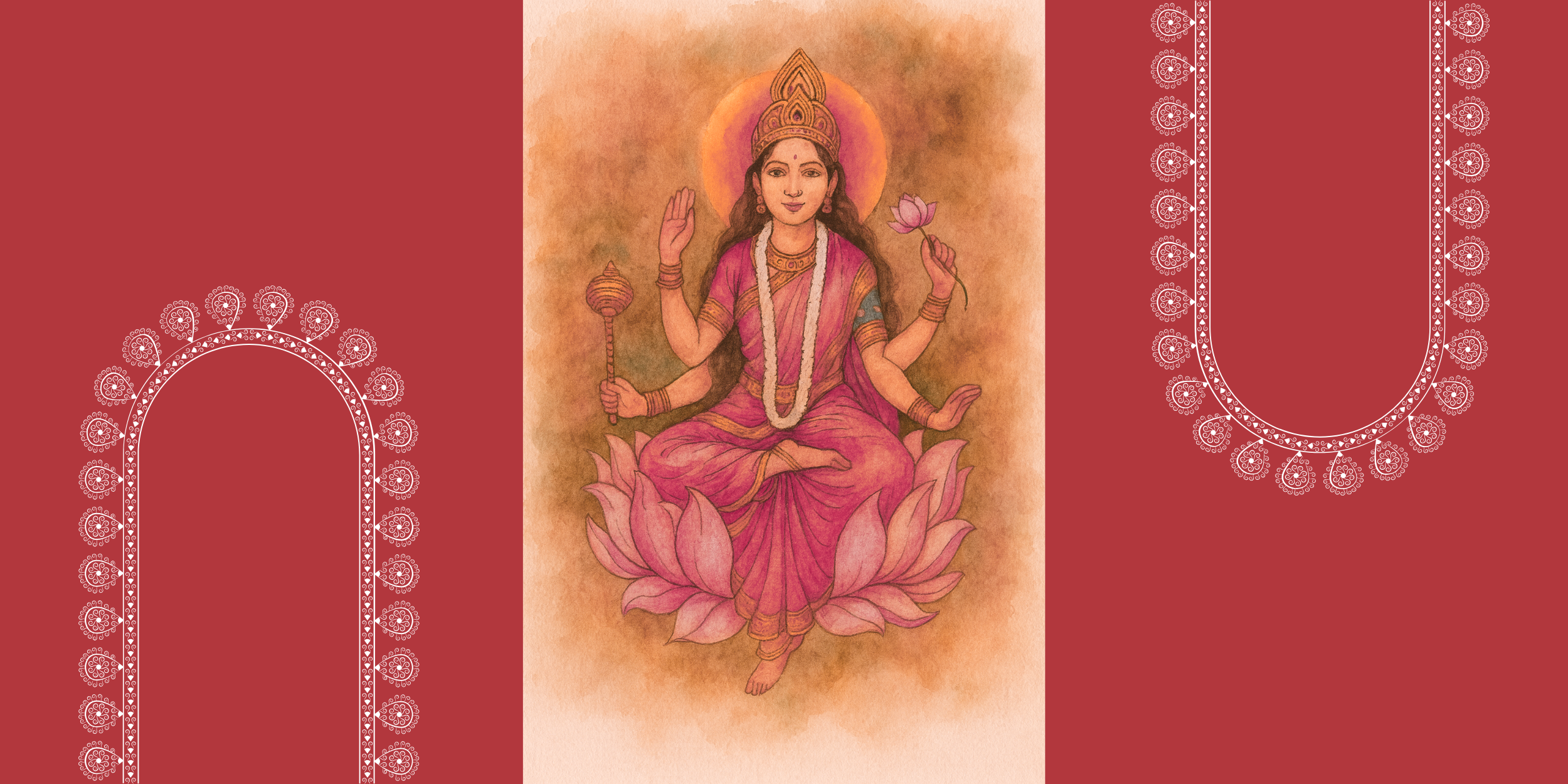
Siddhidatri means “the giver of siddhi,” or accomplishment. She crowns the sequence because every sincere effort seeks completion.
सिद्धगन्धर्वयक्षाद्यैरसुरैरमरैरपि। सेव्यमाना सदा भूयात् सिद्धिदा सिद्धिदायिनी॥
In 2026, she shares 19 October with Maha Navami, though some families honour her on Navami morning, 20 October.
Ninth day practice: Review all nine days in writing. Try to complete your particular mantra sadhana or naam japa on this day.
Navratri Sadhana for students & professionals: The 9-Day Ritual
A working person can complete a full nine-night practice in 30 to 45 minutes a day. The potential lies not in duration but intention and devotion.
A nine-night ritual or anushthana, a vowed spiritual practice, follows the five steps, along with Sankalp on first day.
- Achaman
- Pranayam
- Sankalp (First Day)
- Ganapati Sadhana
- Durga Saptshloki Sadhana
- Meditation on Navarna Mantra
Benefits of Shri Durga Saptshloki: Manifest health, wealth & get free of addictions
Note: Readers fluent in Sanskrit may go further and recite the complete Durga Saptashati, following the method laid out in the Gita Press edition. That method includes the Devi Kavacham, Argala Stotra and Kilakam before the thirteen chapters, and Siddhakunjika Stotra after completion of each day recitation.
If you have no formal guru, take your sankalp before Lord Ganesha or Mahadev, whom tradition honours as the Adi Guru, the first teacher.
However, the Durga Saptashati is the mantra-rupa of Maa Durga, the Devi herself in the form of sound.
Therefore, honor the book before every recitation: place it on a clean cloth, offer a flower, and bow with complete surrender and devotion. If you don’t know Sanskrit, listening to the Saptashati with attention carries same grace.
Alternatively, read Durga Saptashloki, seven verses that hold the very essence of the full Durga Saptshati. Understand the literal meaning and try to derive the hidden spiritual meaning of each mantra in Saptshloki.
Navratri Rituals anyone can perform at home
Every Navratri ritual has its divine beauty that associates with auspiciousness for practitioners.
Ghatasthapana and Jau Sowing
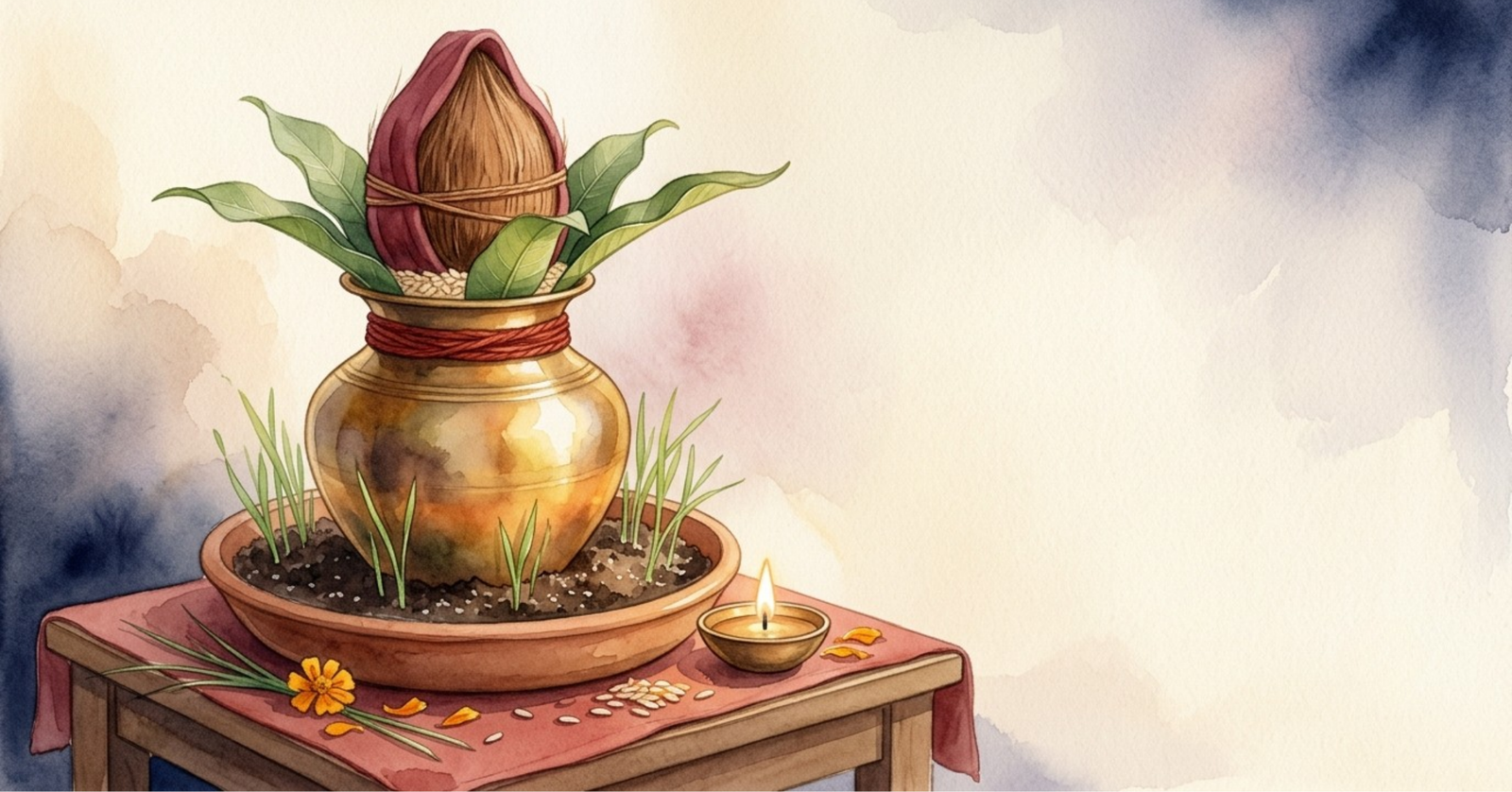
Ghatasthapana, also called Kalash Sthapana, installs the Devi’s presence in a water-filled pot on Pratipada. Fill a copper or clay kalash with clean water, add a coin and akshat, and crown it with five mango leaves and a coconut.
Beside it, spread clean soil in a shallow earthen tray and sow jau, or barley. Water it lightly each morning. By Navami, the green shoots offer a quiet, living record of nine days of continuity.
For the full samagri list, the Kalash mantra and all six steps, read our Ghatasthapana puja vidhi guide.
Akhand Jyoti
Akhand Jyoti means an unbroken flame kept alight for all nine days. It symbolises unbroken attention, and a family home with constant supervision can keep it safely.
However, a student in a hostel or a professional living alone cannot watch a flame through the night. Therefore, light a ghee lamp at the start of every sadhana and keep it burning throughout the japa.
Kanya Pujan and Sandhi Puja on 19 October
Kanya Pujan honours young girls (unmarried) as living forms of the Devi, with sattvic food and respect. Families usually perform it on Ashtami or Navami, and both fall on 19 October this year. Invite girls and keep the occasion simple and warm.
If you live alone, you may instead sponsor a meal or school supplies for girls through a trusted local organization.
Sandhi Puja honours the junction of Ashtami and Navami, from 10:27 AM to 11:15 AM in New Delhi. Bengal’s tradition offers 108 lamps; an individual may light one lamp and chant 108 names of the Devi.
Timings vary by city, so check your local panchang – Drik Panchang link.
Vijayadashami Homa
On Navami morning, 20 October, a havan concludes the sadhana. Offer ghee and havan samagri Agni Devta with the navarna mantra. If a fire is impossible, many traditions accept additional malas of the same mantra as purnahuti, the completing offering.
Parana means breaking the vrat. Drik Panchang places Navratri Parana on 20 October; in New Delhi, Dashami begins at 12:50 PM that day. Break the fast with light, sattvic food, as your family custom prescribes.
Vijayadashami, the same day, celebrates the victory of dharma. Households perform Aparajita Puja and Shami Puja, and South India observes Vidyarambham, a child’s formal start of learning.
Jyotish Remedy for Navratri: Donation
The most beautiful aspect of Navratri Sadhana is the service to society. Every Navratri celebrations includes Bhandaras, offering of the sacred khichdi.
In Jyotish, donation is the biggest remedy, as same as the mantra japa. Therefore, individuals can utilize this auspicious opportunity to donate to their community temples, people in need or in the bhandara.
Identify the maraka planet or Graha in your kundli. However, note that maraka planet is not something negative, its just there to accomplish your own prarabdha.
You can refer to numerous YouTube videos for guidance in identifying them. Once you know, refer to the list below and donate any one item corresponding to that planet, of at least ₹500 value.
- Sun (Sun) – Wheat, red cloth, gold
- Moon (Mon) – Rice, milk, silver, white cloth, curd
- Mars (Tue) – Masoor dal (red lentils), jaggery, copper, blood donation
- Mercury (Wed) – Moong dal, green cloth, books
- Jupiter (Thur) – Turmeric, yellow cloth, Light a ghee diya below Peepal tree
- Venus (Fri) – Rose water, silk cloth (white), white sweets
- Saturn (Sat) – Black sesame seeds, mustard oil
- Rahu Maharaj (Sat) – Black gram, black blankets, coconut
- Ketu Maharaj (Sat) – White sesame seeds, woolen cloth, offer food to community dogs (however, always do this for maximum blessings of Lord Bhairava)
Navratri 2026 - Frequently Asked Questions
When does Sharad Navratri 2026 start and end?
Sunday, 11 October. Sharad Navratri 2026 begins with Ghatasthapana on Sunday, 11 October, and ends with Vijayadashami on Tuesday, 20 October. The festival spans ten calendar days because Saptami covers two sunrises. Drik Panchang for New Delhi confirms these dates.
What is the Ghatasthapana muhurat for Navratri 2026?
06:19 to 10:12 AM. The Ghatasthapana muhurat for 11 October 2026 runs from 06:19 AM to 10:12 AM in New Delhi. The Abhijit muhurat, 11:44 AM to 12:31 PM, serves as the alternative.
Why do Durga Ashtami & Maha Navami is on same day in 2026?
Because of tithi timing. In New Delhi, Ashtami ends at 10:53 AM on 19 October, and Navami begins immediately. Since Navami prevails for most of that day, Durga Ashtami and Maha Navami share Monday, 19 October. Navami Homa and Parana follow on 20 October.
Can professionals and students do sadhana during Navratri?
Yes, entirely. A disciplined Navratri practice needs only 30 to 45 minutes a day. A fixed time, a modest mala count kept every night and a short text such as the Durga Saptashloki fit any schedule. Consistency, not duration, gives the practice its strength.
How do you do sadhana in Navratri at home?
Begin with Ganapati. A home Navratri practice opens with a Ganapati invocation, followed by a sankalp on Pratipada stating place, time, name and purpose. The practitioner then keeps a fixed seat, hour and mala count for nine nights. A havan or extra malas on Navami complete it.