
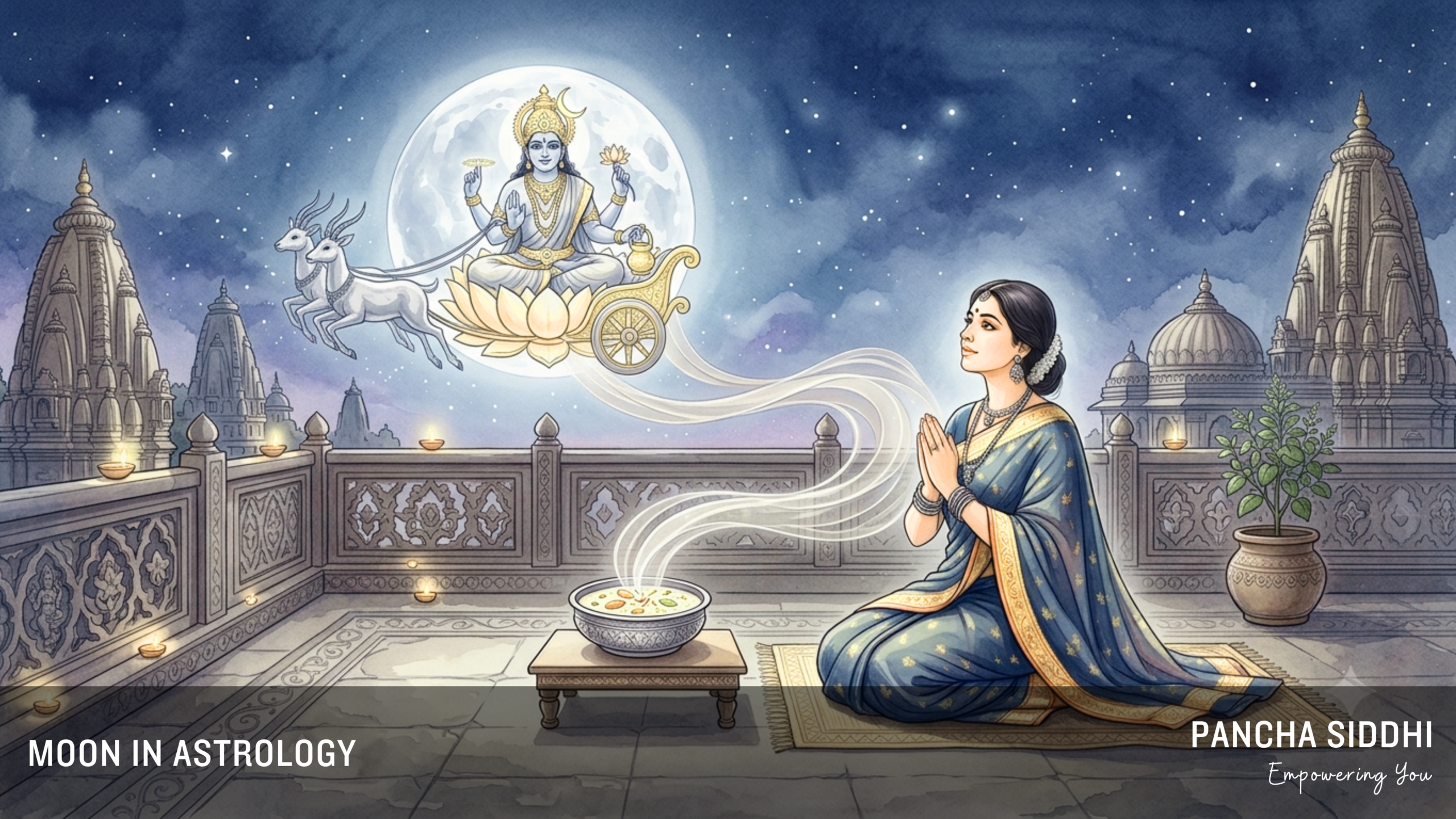
The Moon in Vedic astrology represents the mind, food, and your mother. Additionally, Moon is the second luminous planet in your kundli that is exalted in Taurus at 3° and debilitated in Scorpio at 3°. The Moon rules the 4th sign of Cancer in the zodiac and the Rohini, Hasta, and Shravana Nakshatras.
Additionally, the Moon governs your emotions and memory. That is how you feel, perceive, and remember every day. Therefore, Moon governs how your whole life will be, through your conscious and sub-conscious decision-making.
In this Article
What is the importance of Moon in Vedic astrology?
The rishis considered the Moon the second luminous planet and the natural significator of the mind. Consequently, it also signifies the mother, emotions, memory, food and mental peace in your life.
Moreover, the Moon matters more than the Sun for daily lived experience. Why? Because it governs how you perceive your life, not merely who you are.
Manas means the sensing, feeling mind – the inner surface where every experience lands. Therefore, a restless or an afflicted Moon makes even a good life feel heavy and uncertain. This Mind-Moon link is not modern invention. Moreover, it is rooted in the oldest Vedic text.
चन्द्रमा मनसो जातः
From the mind of the cosmic Purusha, the Moon was born.
Properties of Moon in Vedic Astrology
The classical values below follow the Brihat Parashara Hora Shastra. Study them as the Moon’s complete signature.
| Particulars 🔹 | Moon's Significance 🌕 |
|---|---|
|
Sanskrit Names |
Chandra (चन्द्र), Soma (सोम), Indu (इन्दु), Shashi (शशि), Himanshu (हिमांशु) |
|
Nature |
Natural Benefic (except for an afflicted placement) & Waning condition |
|
Element (Tattva) |
Water (Jal) |
|
Ayurvedic Dosha |
Kapha (Waxing Moon), Vata (Waning Moon) |
|
Varna |
Vaishya |
|
Direction |
North-West |
|
Day |
Somawar (Monday) |
|
Metal |
Silver |
|
Colour |
White |
|
Raag |
Raag Yaman |
|
Exaltation Sign |
Taurus (वृषभ), peak at 3° |
|
Debilitation Sign |
Scorpio (वृश्चिक), peak at 3° |
|
Ruling Sign |
Cancer (कर्क), 4th sign in the Zodiac |
|
Mooltrikona (Auspicious Range) |
Taurus (वृषभ) 4°–30° |
|
Ruling Nakshatras |
Rohini (रोहिणी), Hasta (हस्त), Shravana (श्रवण) |
|
Friendly Planets |
Sun, Mars, Jupiter, Mercury: Neutral |
|
Enemy Planets |
Saturn, Venus, Rahu, Ketu (although no enemy from Moon’s perspective) |
|
Mahadasha |
10 years (Vimshottari Dasha System) |
|
Gemstone |
Pearl (मोती), in Silver, Little-finger |
|
Body Part/ System |
Mind (Brain), Lymph, Stomach, Left Eye |
|
Hormone/ Functional Gland |
Emotions (Pineal & Pituitary Gland), body fluids, sleep (Melatonin regulation contributing to Circadian rhythm along with the Sun) |
|
Relatives |
Mother |
|
Food |
Milk, rice, curd |
|
Career |
Nursing, psychology, hospitality, dairy, Navy/Merchant-Navy, public relations |
|
Business |
Dairy, beverages, pearls & silver, FMCG/public goods, hospitality Medical Equipment, Pharmacy |
The Moon as science & a Life-Management Tool
The Moon reflects the Sun’s light. Likewise, the mind is a reflective surface, never a source. Modern science confirms the Moon’s reach. Lunar gravity drives the ocean tides across the earth. Additionally, the human body is nearly sixty percent water.
Research links lunar and circadian rhythms to melatonin, sleep quality, and mood. Therefore, the ancient claim that the Moon rules the mind meets measurable biology. Jyotish is not superstition; it is a life-management system. The Moon’s placement shows where and how you must steady your mind.
Furthermore, it is good to consider that even if every aspect of your life is in turmoil and you have a subtle, calm mind, you can come across any challenge. In Jyotish, Moon’s placement represent this aspect. The better the placement of the Sun and the Moon in your chart, greater your life will be.
Read More: How the Moon affects the human mind? – An article by Pancha Siddhi
Waxing & Waning Moon in Vedic Astrology - Shukla Paksha vs Krishna Paksha
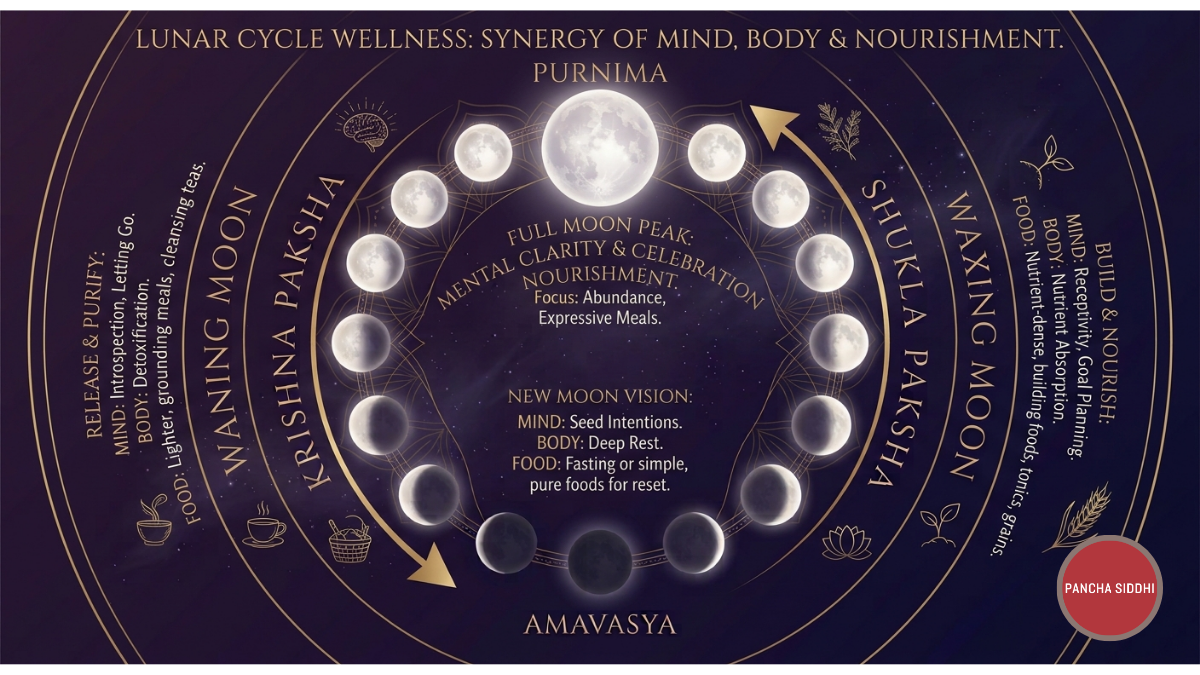
The Moon carries a strength in the form of its phases. Shukla Paksha is the waxing fortnight, from new Moon to full Moon. During it, the Moon gains light, strength, and benefic power steadily.
Krishna Paksha is the waning fortnight, from full Moon to new Moon. Here the Moon loses strength, turning malefic near Amavasya, the new Moon.
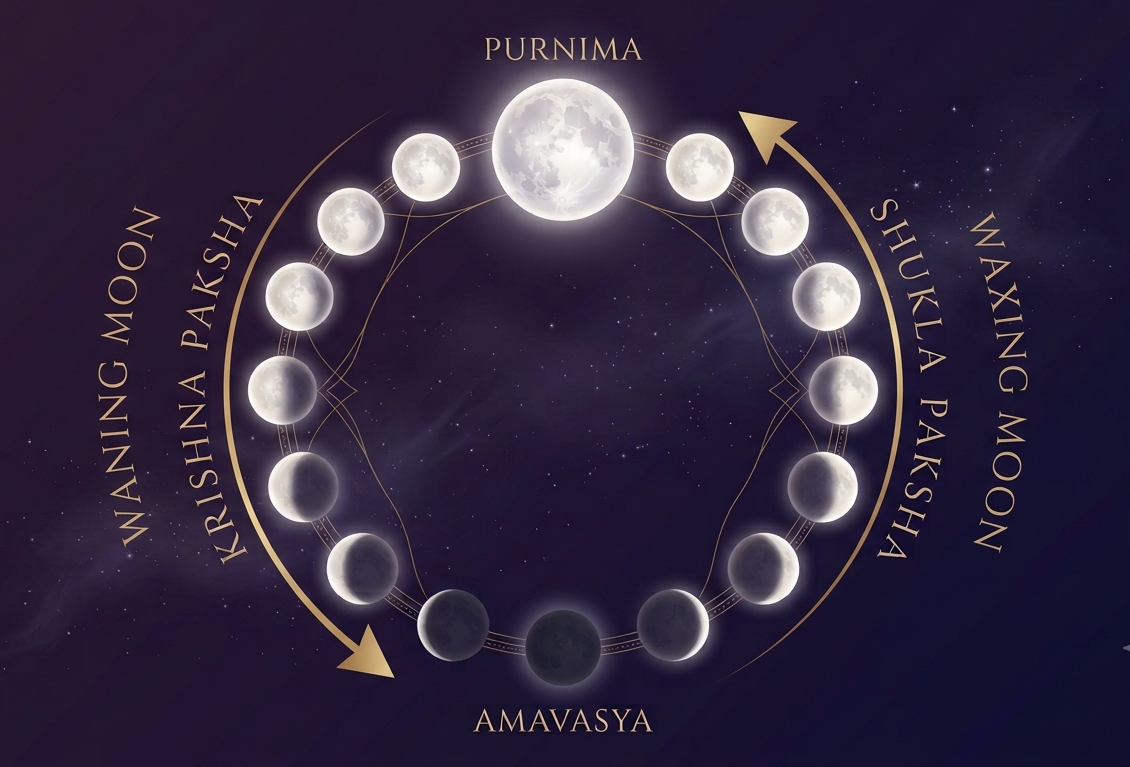
Paksha Bala means “phase strength” – the benefic force a Moon holds by its brightness. Consequently, two identical Moon signs can behave in opposite ways. A bright full Moon in a chart gives confidence and mental steadiness. However, a dark waning Moon inclines toward anxiety and emotional depletion, regardless of sign.
Basically, this is how an individual faces highs and lows in their mood as well as their thought patterns.
Near Amavasya the Moon also stands close to the Sun and becomes combust. This creates a different effect on an individual. For the full planet combustion mechanics, read about the Sun in Vedic astrology.
Strong vs weak Moon: Signs, houses, and effects
A strong Moon gives a calm, resilient, adaptable mind that recovers quickly. Conversely, a weak Moon brings anxiety, mood swings, and constant overthinking. Weak-Moon symptoms often include poor memory, disturbed sleep, and emotional fragility. Moreover, small setbacks feel overwhelming when the inner Moon runs low.
Astrology links mental restlessness to Nishiddha karma – forbidden actions of the past. Therefore, healing the mind and clearing karma move together.
The Moon across signs: Exaltation and Debilitation
The Moon is exalted in Taurus, peaking at 3 degrees. Taurus is the steady, nurturing earth sign where the mind finally finds calm. Taurus is the sign of good clean food. Therefore, individuals having Moon in Taurus always have clean food eating habits and they are serene and calm. The same effect takes place in the ruling sign of Moon, that is Cancer.
The Moon is debilitated in Scorpio, also peaking at 3 degrees. Scorpio is the sign of intensity and upheaval where the mind is churned. This is one single combination where an individual can’t stop overthinking.
However, debilitation is never a final verdict. Nakshatra, degree, aspects, conjunctions, and yogas all modify the outcome. Thus, a wise reading weighs the whole chart, not one placement.
The Moon across houses
The Moon gains digbala, directional strength in the fourth house. This is the house of mother, home, inner peace, and the mind itself. The fourth house is the Moon’s perfect kingdom where it has its natural comfort. Elegantly, this mirrors the Sun’s directional strength in the tenth house.
The Moon also rests well in the first, fifth, and ninth houses. However, it struggles in the sixth, eighth, and twelfth, the dushtana houses that unsettle the mind, and creates extreme issues related to mind, or say thought patterns and food.
The Moon in Ayurveda: Holistic Wellness
The Charaka Samhita names the Moon and mind as one continuous fabric. The Moon governs Kapha dosha while waxing and inclines to Vata while waning. Therefore, the body carries the same lunar duality your chart shows.
The Moon rules Rasa dhatu – plasma and lymph, the first and most fluid tissue. As Soma, Chandra is the nourishing nectar that moistens every tissue of the body.
Furthermore, the Moon in Vedic astrology is the source of Ojas – the subtle essence of immunity. Ojas grants emotional resilience, mental steadiness, and a quiet inner glow.
Now the signature insight: the Moon = manas = Tarpaka Kapha. This sub-dosha of Kapha sits in the brain and nourishes mind, memory, and the senses.
A weak or waning Moon in the chart is often Tarpaka Kapha depletion in the body. The picture is identical: anxiety, insomnia, poor memory, emotional fragility. This is precisely why a weak Moon appears as mental distress, explained through the body.
Heal the body and the chart together for ultimate success, this is the Pancha Siddhi truth. This is how actually Jyotish works! A balanced Rasa and steady Ojas let mantra and remedy energies take root faster. This is an observed fact. Therefore, we generally fast on auspicious days.
The Moon in Career Astrology: Public Life & Business
The Moon in Vedic astrology rules the masses, public dealing, and the emotional trait of markets. As both Jyotish and industrial consultant, I read this trait from two sides at once. Moon-ruled careers include hospitality, dairy, FMCG, nursing, and psychology. Additionally, public relations, marine and navy service, food, beverages, and imports thrive under it.
A strong Moon grants public likeability and a great intution. Great business depends on exactly this instinct for what people want.
However, a weak Moon shows as poor public connection and unstable ventures. Meanwhile, people-facing work drains rather than sustains such a person.
Basically, how much we say about Moon is always less. It is because the thought patterns of an individual decides the whole life. Therefore, how individual responds to a certain stimuli or situation totally depends on the Moon.
The secret mantra of getting ultimate success in life about understanding how Moon works. How you can take control of your mind.
Astrological Yogas or Doshas associated with Moon
These yogas shape a mind of unusual clarity, wealth, or renown. However, more intricate combinations shows whether an individual will be able to enjoy these yogas? Or whether they work in favor or against (dosha):
- Gaja-Kesari Yoga. The Moon and Jupiter sit in mutual houses or gets conjunct in the center houses. This grants wisdom, optimism, fame, and a deeply respected mind.
- Sunapha, Anapha, and Durudhara Yogas. Planets other than the Sun occupy the 2nd, 12th, or both from the Moon. These parallel the Sun’s Veshi, Vasi, and Ubhayachari, giving the mind supporting wealth and eloquence.
- Chandra-Mangal Yoga. The Moon joins Mars in one house. This ignites drive and wealth-generating energy, though it warms the temper.
- Kemadruma Dosha. The Moon stands isolated, with no planets in the 2nd or 12th from it. This inclines toward emotional isolation and mental struggle. However, benefic aspects and a strong Moon can cancel it entirely.
Remember one law above all these combinations. A yoga delivers its full promise only when the Moon itself stands strong, bright and well-placed. Additionally, efficiency of the Yogas depend totally on the entire Kundli-chart, divisional charts, and the current dasha.
Simple remedies of Moon in Vedic astrology
The true remedy begins on the spiritual plane, not with a gemstone. Worship Lord Shiva, who wears the crescent Moon upon his head. Therefore, fasting or Shivalinga Abhishek puja on Monday pacifies the Moon. 🕉️
Sincere, consistent practice is often the only remedy a chart needs. Chant the Moon beej mantra with proper Vidhi and devotion.
ॐ सोम सोमाय नमः
Begin the mantra ideally in Shukla Paksha, on a Monday, aligned to your running dasha. Moreover, serve and honor your mother, she embodies the Moon’s living karma.
Now adding the Ayurvedic layer, our defining strength. Adopt a cooling, Kapha-nourishing routine with adequate sleep and steady hydration. Sit in the moonlight on Purnima, the full Moon, to absorb its auspicious energies. Consider Pearl only as an advanced, chart-specific option after detailed kundli analysis, never a first step.
However, nothing surpasses sincere mantra sadhana and Purushartha – your own righteous effort in form of hard work and discipline.
Key Insights - Moon in Astrology
- The Moon (Chandra) is the karaka of manas, or the mind, emotions, memory, and the mother.
- It is exalted in Taurus at 3° and debilitated in Scorpio at 3°, though its validity depends on the specific chart.
- The Moon gains digbala in the 4th house, its natural house.
- Paksha Bala is the Moon’s unique strength factor: waxing (Shukla) benefic, waning (Krishna) malefic. It creates interesting effects in an individual’s thought patterns.
- Pancha Siddhi uniquely maps the Moon to Tarpaka Kapha, Rasa dhatu, and Ojas – the mental health through Ayurveda.
Moon in Vedic Astrology - FAQ
What does the Moon represent in Vedic astrology?
The Moon represents manas, or the mind, emotions, memory, and inner peace. It also signifies the mother and your instinctive nature. Therefore, it shapes how you feel and perceive every experience.
Where the Sun is your soul, the Moon is the mind that lives your life daily.
Is the Moon a benefic or malefic planet?
The Moon is a natural benefic, yet conditionally so. A waxing (Shukla Paksha) Moon is strongly benefic and steadying. However, a waning (Krishna Paksha) Moon weakens and can turn malefic near the new Moon.
Thus, phase matters more than sign for the Moon’s benefic power. This phase strength is called Paksha Bala.
In which house is the Moon strongest?
The Moon is strongest in the fourth house, where it gains digbala. This house rules home, mother, inner peace, and the mind itself. Therefore, the fourth house is the Moon’s perfect kingdom.
It also performs well in the first, fifth, and ninth houses. However, it struggles in the sixth, eighth, and twelfth houses.
In which sign is the Moon exalted and debilitated?
The Moon is exalted in Taurus, peaking at t3 degrees. Taurus is a calm, nurturing earth sign that steadies the mind. Conversely, the Moon is debilitated in Scorpio, also peaking at 3 degrees.
Yet debilitation is never final. Nakshatra, aspects, and yogas can strongly modify the result.
How can I strengthen a weak Moon?
Begin with worshiping Lord Shiva and chant the Moon beej mantra every Monday. Moreover, serve and honor your mother sincerely.
Then add the Ayurvedic remedy: cooling foods, good sleep, hydration, and Purnima moonlight.
Anulom-Vilom Pranayama and simple breathing meditation is probably the best way to clam your mind, ultimately strengthening an afflicted Moon.
Why is the Moon sign more important than the Sun sign in astrology?
Simple answer to this is no matter how afflicted your chart can be, if you have your mind in proper senses, you can conquer the world.
However, Vedic astrology reads emotional and lived reality from the Moon sign, or Chandra Rashi. The Moon changes signs every two-and-a-quarter days, capturing your inner state precisely. Therefore, it reflects daily life better than the slow-moving Sun.
Most dasha and prediction systems begin from the Moon, not the Sun. Consequently, your Moon sign guides timing, mind, and mood.