
Karma in Vedic Astrology: A Complete Guide in Jyotish

Everything about Karma in Vedic Astrology

Significance of Karma in Vedic Astrology: This article discusses the types of karma and how they shape your life. Interestingly, karma promises a just and intelligent Universe. Karma generally relates to human actions. However, it is not wrong to consider that every process in this Universe and beyond is an integral part of Karma.

Karma is a mathematical progression associated with every activity within the system of the universe, with numerous nodes (or results). The Universe itself is an effect of the karma of creation by Brahma.
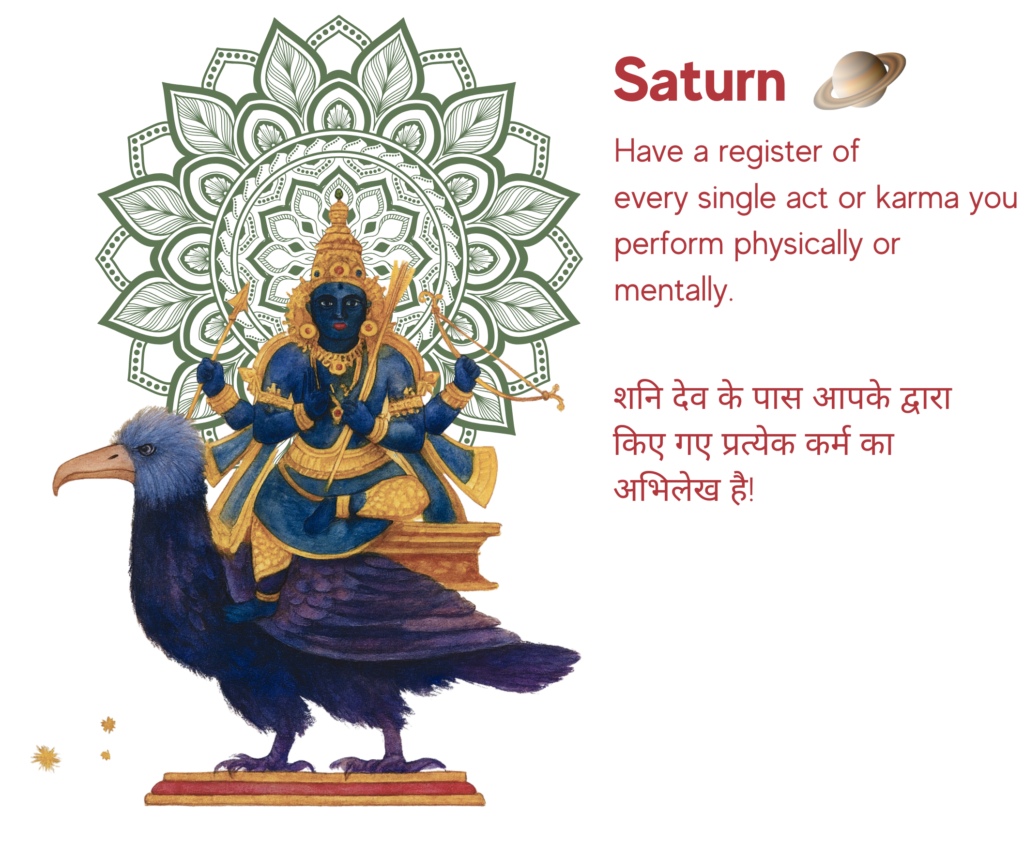
Karma in Vedic Astrology

In Jyotish, Karma determines how a soul experiences life through the human body and mind and ultimately attains moksha.

Therefore, the one who understands Karma, as explained in this article, also understands Jyotish and its significance. Such individuals are more likely to get powerful benefits and growth through Jyotish.


What is Karma in Vedic Astrology?

When most people hear Karma, they simply think of cause and effect. However, in reality, it is far more intricate. In Jyotish, karma is a conscious action that leaves a subtle impression on the soul. For instance, when you compress a spring, it certainly expands. Likewise, every action eventually seeks expression. Yet, in life, the effect rarely appears immediately. Instead, that action associates itself with the soul as a karmic imprint whose result will unfold later.

Moreover, karma includes everything you do: each breath, every blink, the wave of your hand, and even the thoughts you create. Consequently, every action, however small, physical or non‑physical, verbal or non‑verbal, becomes karma. In other words, karma is your very state of being. Therefore, karma includes thoughts, intentions, words and deeds that together shape your present and future experiences.

You cannot exist without engaging in karma. In fact, every force in the Universe – yourself, the flora and fauna, the Earth, the Sun and the Moon – constantly performs karma. Hence, karma is everything. You exist because of karma, and finally, you leave the body because of the karma of breath, the Prana Vayu, resulting in death.

Furthermore, according to the law of karma, every intentional or obvious act produces a precise result, even if its fruit appears much later. Karma lingers until its seeds ripen into circumstances, relationships and inner tendencies. Thus, understanding how karma operates becomes essential to understanding destiny.

In Vedic Astrology, the horoscope or kundli reflects which karmic seeds will sprout in the current lifetime. Consequently, a kundli becomes an elegant mirror of “what you have” and “what should be done” throughout this life.

Therefore, Jyotish is an excellent life management tool that helps you achieve inner-happiness and strength.

Types of Karma: Sanchita, Prarabdha, and Kriyamana Karma

sanchita karma in vedic Astrology
prarabdha karma in vedic astrology
Kriyaman Karma in Vedic Astrology

Firstly, Sanchita karma is the vast store of karmic impressions from previous lives that have not yet borne fruit. Secondly, Prarabdha karma is the selected portion of Sanchita that ripens in this birth. Thirdly, Kriyamana karma consists of actions you perform now, creating future results that first add to Sanchita and later emerge as Prarabdha in some lifetime.

Prarabdha karma or destiny shapes the foundational conditions of your present birth. It decides the exact time, location, and family of birth and, consequently, sets almost all major probabilities in life. These probabilities and their realised events are Prarabdha. One can never escape or change Prarabdha. Even Paramatma or divine incarnations have to go through their individual Prarabdha.

However, you can create a conducive inner and outer environment to gain strength and wisdom as different Prarabdha karmas unfold. Jyotish helps you understand these karmic patterns so that you can act righteously and in the correct direction. Here, Kriyamana karma grants significant freedom within the framework created by Prarabdha.

Kriyamana karma is your free will, your conscious choice of present actions. Therefore, your current actions must remain dharmasangat, i.e. aligned with dharma, and you must stay continuously aware of them. One who understands and accepts his or her Prarabdha can make righteous, conscious and empowered decisions in life.

These decisions become good Kriyamana karma. In Vedic wisdom, such a person is considered truly intelligent and blessed by Ganesh Ji. This is because he or she receives Sadh Buddhi and lives in the state of Karma Yoga.

How Karma Works Across Lifetimes?

Vedic texts distinguish between constructive and harmful karma through Nitya karma and Nishiddha karma. Nitya karma refers to daily, dharmic duties that purify the mind and support spiritual progress. In contrast, Nishiddha karma involves prohibited actions that clearly violate dharma and inevitably lead to severe negative consequences.

AspectNitya KarmaNishiddha Karma
NatureObligatory, daily/regular ritesProhibited, harmful actions
PurposeSpiritual discipline, karma reductionAvoiding sin (Papam)
ConsequencesPratyavaya if skippedPaap, negative rebirths
Jyotish RoleSupports remedies, nishkama actionHandling malefic yogas
 

Nitya karma, or daily obligatory duties performed in goodwill, registers as auspicious in Sanchita karma and refines the inner being. When you perform such actions with awareness and offering, they support the soul rather than bind it. In contrast, Nishiddha karma consists of harmful actions that violate dharma and, as a result, intensify suffering when their Prarabdha eventually manifests.

When your actions align with dharma, even difficult Prarabdha becomes a ladder to higher wisdom, evolution and good fruits. However, when actions oppose dharma, even favourable Prarabdha can end in disappointment and turmoil. Therefore, karma is real, precise and compassionate, not cruel. It continually offers every atma opportunities to learn love, responsibility, clarity, moral values and good deeds.

Kundli Analysis & Pending Karma in Vedic Astrology

In Vedic astrology, Karma works by mapping Prarabdha at the exact moment of birth. At that instant, your kundli becomes a precise projection of sky, revealing which karmic seeds from the vast Sanchita karma have been chosen to sprout in the lifetime after birth.

By the command of Paramatma, the soul takes physical birth at a specific time and place, when the baby leaves the mother’s womb, receives Prana Vayu and cries for the first time. In that sacred instant, the nine planets and 27 nakshatras occupy definite positions in the space, and their radiations, waves and fields imprint a unique combination upon the newborn.

Additionally, it also signifies a chain of probable events, starting from a particular instant of time, here, birth.

When we project this arrangement of planets and nakshatras onto a two‑dimensional schematic diagram, we obtain the kundli, or the birth chart or horoscope. This chart is the individual’s cosmic identification: a stable record of the planetary and house positions active at birth.

Therefore, karma in Vedic astrology is represented by a kundli.
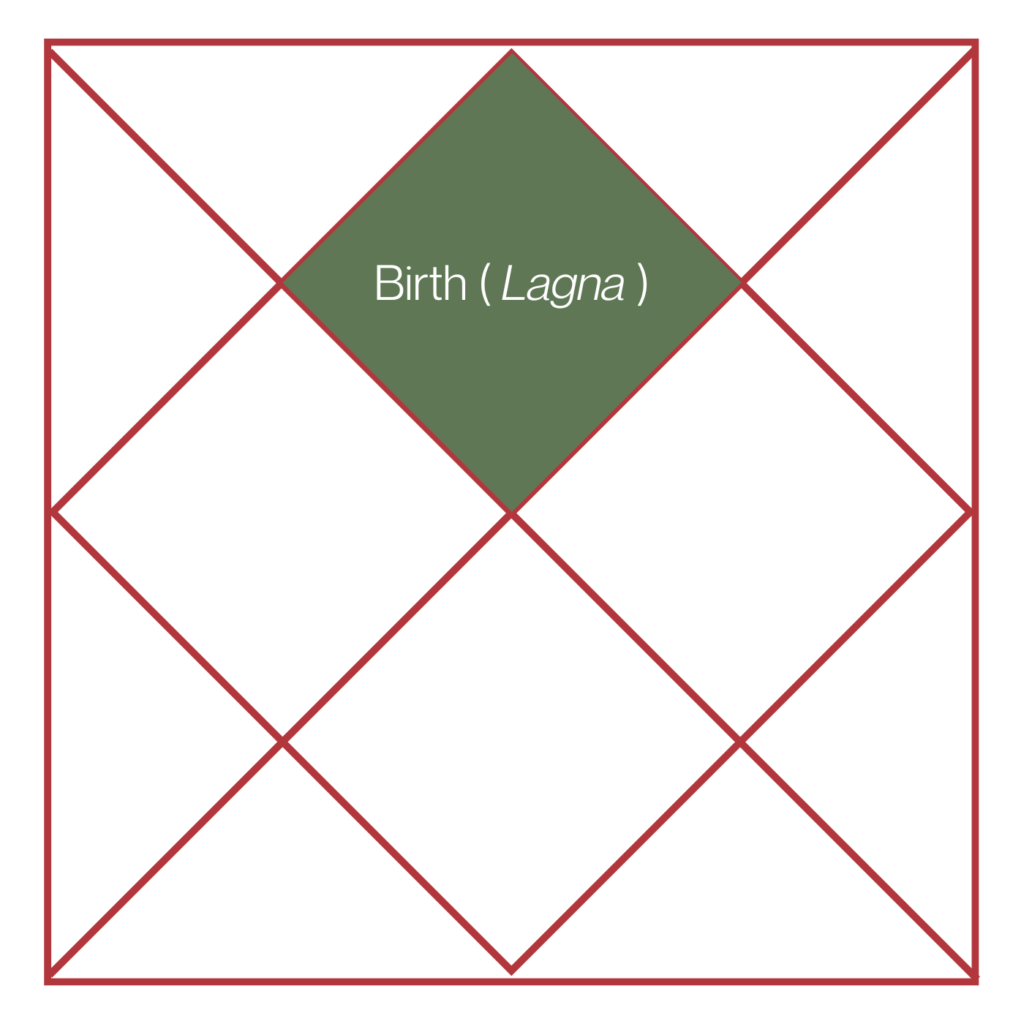
understanding karma in Vedic Astrology through a kundli

In this horoscope, Lagna (Ascendant or the first house) marks your physical incarnation, body type, temperament and basic life directions, showing how the selected karmic seeds will unfold as circumstances, tendencies and opportunities across this lifetime.

Similarly, each house in the kundli represents a distinct aspect of human life. In these twelve houses, the nine planets, benefic and malefic, occupy, aspect and sometimes conjoin, creating countless subtle patterns.

These twelve divisions of the sky also host the zodiac signs, each containing three nakshatras. From the Earth’s viewpoint, every planet gains a specific strength based on its exact longitudinal degree, or Graha Sphuta.

From birth, these planets then run their respective dasha or time periods, activating different parts of your Prarabdha at precise moments.

All these intricate combinations of houses, signs, planets, nakshatras, strengths and dashas together outline a person’s destiny, or Prarabdha karma. They act as precise pointers into the vast data of Sanchita karma, revealing your dominant tendencies and likely life trajectory.

In this way, Jyotish offers a truly brilliant and elegant map of how karma in Vedic astrology unfolds through a kundli.

Karma-related FAQs

From the Jyotish view, karma is partly fixed and partly flexible. Prarabdha karma for this birth cannot be changed; however, Kriyaman karma, your present choices and efforts, can transform how you experience it and what future karma you create.

Through dharmic actions, inner sadhana and practical Jyotish remedies such as mantra, charity, puja, hard work, and a disciplined lifestyle, you gain the strength to go through Prarabdha and harmonise the soul, while reducing the intensity of difficult patterns.

Thus, Jyotish maps where fate is firm and where free will is powerful, guiding you to use karma wisely for learning instead of feeling helpless.

Nitya karma and Nishiddha karma shape how you experience Prarabdha now and what you carry into future births.

When you perform Nitya karma, i.e. daily dharmic duties, prayer, charity and truthful living, it purifies the mind, builds inner strength, reduces the impact of Prarabdha and helps you accept challenges with peace and inner happiness. This also enhances learning.

By avoiding Nishiddha karma, clear violations of dharma that create heavy paap, you prevent new suffering and protect future births from harsher circumstances.

In this way, disciplined Nitya karma and conscious avoidance of Nishiddha karma work together to reduce suffering, harmonise the soul and steadily improve your karmic trajectory over lifetimes.

Slowly, this practice is what helps an individual soul to achieve Moksha.